How Much Does Gorilla Trekking in Rwanda Cost in 2027? Complete Price Guide
September 26, 2026Clementine
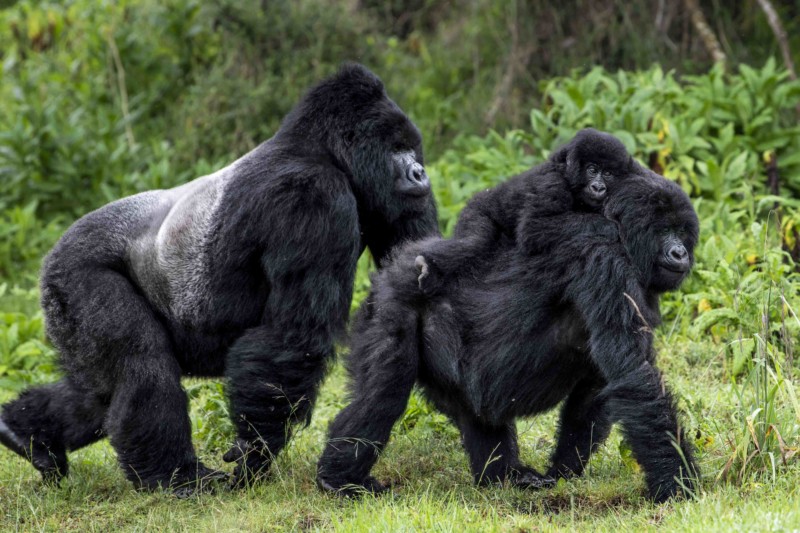
Gorilla Trekking Rwanda Cost | Rwanda Gorilla Safari 2027 | Volcanoes National Park
Imagine leaving Kigali before sunrise, travelling through Rwanda's famous green hills and winding mountain roads, and arriving at the foothills of the Virunga Mountains just as the morning mist begins to lift.
Ahead of you is Volcanoes National Park.
Inside its ancient bamboo and montane forests live some of the world's most remarkable animals: the endangered mountain gorillas.
You begin walking.
The trail becomes steeper. The forest becomes quieter. Your guide and trackers carefully follow signs left by a gorilla family.
Then suddenly, you see them.
A silverback watches from the vegetation. A mother holds her infant. Young gorillas move through the forest, climb, play and interact with one another.
For many travellers, this is the moment that explains why gorilla trekking Rwanda cost is very different from the price of an ordinary wildlife excursion.
You are not simply purchasing a wildlife activity.
You are entering a carefully managed conservation experience built around endangered mountain gorillas, professional guides and trackers, limited visitor numbers, strict tourism rules and a wider conservation system.
For 2027, travellers should plan around the current official Rwanda Development Board tariff while waiting for any official 2027 pricing announcement. At present, the official RDB booking system lists the gorilla permit for a foreign visitor at US$1,500 per person. The same system lists different promotional rates for qualifying Rwandan citizens, East African citizens, African citizens and foreign residents, subject to eligibility and applicable periods.
But the permit is only one part of your total gorilla trekking Rwanda cost.
This complete guide explains the price, conservation story, organization of the park, gorilla trekking strategy, golden monkey trekking, volcano hiking, accommodation, one-day and two-day itineraries from Kigali, how Akagera differs from the Serengeti and Masai Mara, what to pack and how Seek Wild Africa can organize your journey.
Gorilla Trekking Rwanda Cost in 2027: The Essential Price Guide
How Much Is a Gorilla Permit in Rwanda?
The current official Rwanda Development Board booking information lists the following gorilla permit rates:
Visitor category
Current official listed rate
Foreign visitor
US$1,500
Foreign resident in Rwanda
US$500*
African citizen / foreign resident in Africa
US$500*
Rwandan citizen
US$200*
East African citizen
US$200*
*RDB currently identifies these as promotional rates and notes restrictions for certain periods. Eligibility requirements also apply. Travellers planning for 2027 should confirm the price and eligibility applicable to their travel date before payment.
What Does the Gorilla Permit Mean?
The gorilla permit gives you access to the regulated gorilla-tracking experience in Volcanoes National Park.
However, your total safari budget can also include:
- Transportation from Kigali
- Private 4x4 vehicle
- Professional driver-guide
- Accommodation
- Meals
- Porter services
- Golden monkey trekking
- Volcano hiking
- Cultural experiences
- Kigali activities
- Airport transfers
- Additional national parks
Therefore, when someone asks “How much does gorilla trekking in Rwanda cost in 2027?”, the most useful answer is not simply the permit price.
The complete safari price depends on how you want to travel.
Why Is Gorilla Trekking Rwanda So Expensive Compared With an Ordinary Safari?
You Are Visiting an Endangered Species in a Controlled Environment
Gorilla tourism is deliberately limited.
Rwanda's official tourism information states that there are approximately 1,000 mountain gorillas in the wild, with around 604 in the Virunga Massif. The Volcanoes population is closely monitored and protected, and each habituated gorilla family has a strict limit on tourist contact.
Only a limited number of visitors can enter the forest each day.
According to Visit Rwanda, eight tracking permits are issued per gorilla troop per day, and each group has a maximum viewing period of one hour. Visitors gather at the park headquarters in Kinigi at 7:00 a.m. for briefing and family allocation.
This limited-access model is important.
Rwanda is not trying to create a mass tourism experience in which hundreds of people surround one gorilla family.
Instead, the experience is designed around:
- Small groups
- Professional guides
- Trackers
- Park rangers
- Strict viewing rules
- Limited daily permits
- Disease-prevention measures
- Habitat protection
The price therefore reflects a highly controlled wildlife tourism model.
Volcanoes National Park: A Conservation Story That Makes the Journey Different
From the 1920s to Today's Gorilla Conservation
Volcanoes National Park has a long conservation history.
The protected area originated as part of the Albert National Park, established in 1925 to protect the mountain gorillas and their habitat. The Rwandan portion later became Volcanoes National Park.
But the park's history has not been a simple success story.
Over the decades, the forest experienced pressure from agriculture and changes to park boundaries. In 1969, a major portion of the park was removed for pyrethrum cultivation. Conservation organizations and authorities later shifted toward protecting the remaining forest and developing gorilla tourism as part of the conservation strategy.
This history is important because today's experience was not created overnight.
It is the result of decades of protection, research, tourism development and community involvement.
Dian Fossey and the Beginning of a New Era
In 1967, Dian Fossey established the Karisoke Research Centre between Mount Bisoke and Mount Karisimbi.
She spent approximately 18 years studying and protecting mountain gorillas.
Her research, anti-poaching efforts and international advocacy helped bring global attention to the conservation of the species.
Her story later reached an international audience through Gorillas in the Mist, helping make the mountain gorillas of Rwanda known around the world.
Today, travellers can visit the Dian Fossey conservation area and learn about the history of gorilla research and protection.
This means a Rwanda gorilla safari can become more than wildlife viewing.
It can also be a journey through the history of modern mountain-gorilla conservation.
Resilience: How Volcanoes National Park Survived Difficult Times
Volcanoes National Park has experienced periods of serious instability.
Tourism was interrupted during periods of conflict, including the years surrounding the 1994 genocide against the Tutsi. The park reopened and closed again during periods of insecurity before gorilla tracking eventually resumed permanently in 1999.
The significance of the modern gorilla tourism experience becomes clearer when this history is considered.
The forest that tourists enter today is not simply a beautiful destination.
It represents a conservation system that has continued through difficult periods and has become an important part of Rwanda's tourism and environmental strategy.
Why Volcanoes National Park Is One of Africa's Most Distinctive Wildlife Destinations
It is difficult to objectively declare one African national park “the best,” because different parks offer completely different experiences.
The strength of Volcanoes National Park is its combination of mountain gorillas, volcanoes, high-altitude forest, golden monkeys, conservation history and carefully controlled tourism.
Visit Rwanda describes the park as protecting the steep slopes of the Virunga Mountains and a mosaic of montane ecosystems including evergreen and bamboo forest, grassland, swamp and heath.
The landscape itself is extraordinary.
The Virunga volcanoes include:
- Mount Karisimbi – 4,507 metres
- Mount Bisoke
- Mount Muhabura
- Mount Gahinga
- Mount Sabyinyo
The mountains create an environment that looks completely different from the open savannahs of East Africa.
What Makes Volcanoes National Park Different From the Serengeti and Masai Mara?
The Great Migration Is Not the Story Here
The Serengeti and Masai Mara are famous for their huge savannah landscapes and the spectacular Great Migration.
That is one of Africa's great wildlife phenomena.
Rwanda does not attempt to reproduce that experience.
Instead, Volcanoes National Park offers something fundamentally different.
Serengeti and Masai Mara
Travellers commonly visit for:
- Vast savannah landscapes
- Large herbivore herds
- Predator encounters
- Lions and other carnivores
- Vehicle-based game drives
- Seasonal migration
Volcanoes National Park
Travellers visit for:
- Mountain gorilla trekking
- Golden monkey trekking
- Volcano hiking
- Montane rainforest
- Bamboo forest
- Dian Fossey's conservation history
- Birdwatching
- Cultural experiences
- High-altitude landscapes
So the comparison should not be about which destination is “better.”
They are different safari experiences.
A traveller who wants the Great Migration may choose the Serengeti or Masai Mara.
A traveller who wants to walk through a volcanic mountain forest and encounter a habituated mountain gorilla family may choose Rwanda.
And travellers who want both types of experience can build a wider East African journey.
Volcanoes National Park Is Not a Traditional Game-Drive Park
One important point for first-time visitors is that game drives are not the main activity in Volcanoes National Park.
This is not Akagera.
Volcanoes is a mountain and primate destination.
Instead of spending most of the day inside a safari vehicle searching across open plains, visitors can participate in activities such as:
- Gorilla trekking
- Golden monkey trekking
- Volcano hiking
- Dian Fossey memorial hiking
- Birdwatching
- Cultural experiences
- Buhanga Eco-Park
- Musanze Caves
- Village experiences
Visit Rwanda also highlights hiking, canoeing, mountain biking and village experiences around the Volcanoes region.
Gorilla Trekking: The Main Experience
Gorilla trekking is the reason most international visitors travel to Volcanoes National Park.
The experience begins early.
7:00 a.m. – Registration and Briefing
Visitors gather at the park headquarters in Kinigi.
Guides explain the rules and visitors are allocated gorilla families according to factors including fitness levels.
The Trek
The trek can take considerably different amounts of time depending on where the gorilla family has moved.
You may walk through:
- Bamboo forest
- Thick vegetation
- Steep slopes
- Muddy trails
- Open mountain areas
The trackers work ahead to locate the family.
The Gorilla Encounter
Eventually, the forest changes.
You hear movement.
You see branches moving.
Then the gorillas appear.
You may encounter:
- Silverbacks
- Mothers
- Infants
- Juveniles
- Feeding gorillas
- Resting gorillas
- Playing youngsters
The official visitor experience limits tourist contact to one hour per group per day.
That hour can feel incredibly short.
But it is deliberately short because conservation comes before tourism.
Golden Monkey Trekking in Volcanoes National Park
Gorillas are not the only primates worth seeing.
The Virunga region is also home to the endangered golden monkey.
Golden monkey trekking provides a very different experience from gorilla trekking.
Golden monkeys are smaller, faster and often much more energetic.
Instead of quietly observing a large gorilla family, you may find yourself following quick-moving monkeys through bamboo vegetation.
This makes golden monkey trekking an excellent additional activity for travellers staying two or more nights in the Volcanoes region.
Hiking the Volcanoes
Mount Bisoke
Mount Bisoke is one of the most popular volcano hikes.
Its summit contains a beautiful crater lake, creating a rewarding experience for travellers who want to combine wildlife with physical adventure.
Mount Muhabura
Mount Muhabura provides a much more demanding mountain experience and rises to approximately 4,127 metres.
The hike is suitable for travellers who are physically prepared for a challenging high-altitude climb.
Mount Karisimbi
At approximately 4,507 metres, Mount Karisimbi is one of the highest peaks in the Virunga Massif and offers a serious two-day mountain adventure.
The Volcanoes region therefore gives travellers the possibility of combining gorillas + golden monkeys + mountain hiking within one destination.
Dian Fossey Memorial Experience
Travellers interested in conservation history can hike toward the Dian Fossey memorial area.
The route leads toward the former Karisoke Research Centre and the place associated with Fossey's work with mountain gorillas.
This activity is particularly meaningful after gorilla trekking because you can understand more about the history behind the animals you have just encountered.
You are no longer looking only at a gorilla.
You begin to understand the decades of research and conservation that helped make that encounter possible.
Akagera National Park: Rwanda's Other Side of Safari
Although Volcanoes National Park is the centre of gorilla trekking Rwanda, travellers should not overlook Akagera National Park.
Akagera provides a completely different experience.
It is Rwanda's savannah landscape and home to thriving populations of lion, leopard, elephant, rhino and buffalo, alongside zebra, giraffe, antelope and hundreds of bird species.
Why Akagera Is Different From the Serengeti and Masai Mara
Akagera is not famous for the Great Migration.
Its uniqueness comes from the combination of:
- Savannah
- Lakes
- Wetlands
- Rolling hills
- Woodland
- Big Five wildlife
- Boat safaris
- Game drives
- Birdwatching
- A remarkable conservation-recovery story
Akagera is Central Africa's largest protected wetland and Rwanda's only protected savannah environment.
Akagera Game-Drive Strategy
A successful Akagera safari is not simply about driving around hoping to see animals.
A good game-drive strategy considers:
Early Morning
Begin early when temperatures are cooler and many animals are more active.
This is a valuable period for searching for predators and herbivores.
Water Sources
Akagera's lakes and wetlands create important wildlife areas.
Animals may gather around water, particularly depending on season and conditions.
Habitat Diversity
Do not concentrate on one landscape.
Akagera contains plains, wetlands, woodland and lakes, so moving through different habitats increases the variety of wildlife you can encounter.
Use Local Knowledge
Experienced guides know the park's roads, habitats and recent wildlife movements.
This is particularly important when searching for less predictable animals such as lions, leopards and rhinos.
Add a Boat Safari
A boat safari on Lake Ihema provides a completely different perspective.
Instead of searching across the savannah from a vehicle, you observe wildlife from the water, including hippos, crocodiles and water-associated birdlife.
Akagera's Conservation Resilience
Akagera also has a powerful conservation story.
Established in 1934, the park experienced severe wildlife losses and pressure after the 1994 genocide.
In 2010, African Parks began managing Akagera in partnership with the Rwanda Development Board.
Since then, conservation efforts have included the return of lions in 2015, eastern black rhino in 2017 and 2019, and southern white rhino in 2021, followed by an additional 70 southern white rhino introduced in 2025.
That restoration story makes Akagera valuable for a different reason.
Volcanoes tells the story of mountain-gorilla conservation.
Akagera tells the story of savannah restoration.
Together, they demonstrate two very different sides of Rwanda's conservation journey.
One-Day Gorilla Safari From Kigali
A one-day gorilla safari from Kigali is possible, but it requires excellent organization because visitors must report to the park registration centre at 7:00 a.m.
Sample One-Day Gorilla Trekking Rwanda Itinerary
4:00–4:30 a.m. – Pick-Up in Kigali
Your Seek Wild Africa driver-guide collects you from your Kigali hotel or agreed location.
4:30–6:45 a.m. – Drive to Volcanoes National Park
Travel north through Rwanda's beautiful countryside toward Musanze and Kinigi.
7:00 a.m. – Registration and Briefing
Arrive at the park headquarters.
Register, receive your briefing and receive your gorilla family allocation.
7:30–8:00 a.m. – Start the Trek
Drive or walk to the appropriate trailhead depending on your assigned gorilla family.
Morning – Gorilla Trekking
Follow trackers through the forest.
The walking time can vary according to the location of the gorilla family.
Gorilla Encounter
Spend the regulated viewing period observing the family.
Afternoon – Return From the Forest
Return to the park base, meet your driver and have lunch.
Afternoon – Drive Back to Kigali
Begin your journey back to Kigali.
Evening – Arrive in Kigali
Your one-day gorilla adventure ends in Kigali.
Is One Day Enough?
It is possible, but it is demanding.
For travellers who want a more relaxed experience, sleeping near Volcanoes National Park the night before the trek is often more comfortable.
Beautiful Two-Day Gorilla Trekking Tour From Kigali
A two-day itinerary provides more time to appreciate the Volcanoes region and reduces the pressure of travelling from Kigali on the morning of the trek.
DAY 1: Kigali – Volcanoes National Park
Morning – Depart Kigali
Your Seek Wild Africa driver-guide picks you up and begins the journey north.
Midday – Arrive in Musanze
Stop for lunch and prepare for the afternoon.
Afternoon – Volcanoes Experience
Depending on your interests and available time, choose from:
- Golden monkey experience
- Dian Fossey-related experience
- Musanze Caves
- Buhanga Eco-Park
- Cultural experience
- Scenic volcano viewpoints
Evening – Lodge Check-In
Check into your selected accommodation.
Enjoy dinner.
Prepare your trekking equipment.
Go to bed early.
DAY 2: Gorilla Trekking – Kigali
Early Morning – Breakfast
Have breakfast and prepare your daypack.
7:00 a.m. – Kinigi Headquarters
Report for briefing and gorilla-family allocation.
Morning – Enter the Forest
Begin trekking with your guide and trackers.
Gorilla Encounter
Spend your regulated viewing time with the gorilla family.
Take photographs responsibly and follow all instructions.
Afternoon – Lunch and Departure
Return from the trek, have lunch and begin your journey back to Kigali.
Evening – Arrive in Kigali
End your two-day Rwanda gorilla trekking adventure.
Where to Stay During Gorilla Trekking Rwanda
Accommodation is another major part of your total gorilla trekking Rwanda cost.
Rwanda offers different standards of accommodation around Volcanoes National Park.
Luxury Lodges
For travellers looking for a premium experience, the Volcanoes region includes properties such as:
- Virunga Lodge
- Bisate
- Singita Kwitonda
- Sabyinyo Silverback Lodge
These properties provide different luxury experiences, including mountain scenery, refined accommodation and high-end hospitality.
Visit Rwanda's official accommodation directory currently categorizes Virunga Lodge as luxury accommodation in Volcanoes National Park.
Classic and Comfortable Accommodation
Travellers looking for comfortable accommodation without choosing the highest luxury level can consider properties such as:
- Five Volcanoes Boutique Hotel
- Tiloreza Volcanoes Ecolodge
- Other established lodges and hotels around Musanze and Kinigi
Visit Rwanda lists Five Volcanoes Boutique Hotel as a classic accommodation option and notes its proximity to the gorilla trekking starting area.
Why Location Matters
For a gorilla trek, location is more than comfort.
A lodge closer to Kinigi can make the morning considerably easier because registration begins at 7:00 a.m.
This is particularly important for travellers doing a two-day or three-day gorilla safari.
What Should You Bring for Gorilla Trekking Rwanda?
The mountain environment can be wet, cool and muddy.
Good preparation can make a major difference.
Clothing
Bring:
- Long trousers
- Long-sleeved shirt
- Waterproof jacket
- Warm layer
- Hiking boots
- Thick socks
- Gaiters
- Hat
- Light gloves
- Comfortable trekking clothes
Visit Rwanda recommends sturdy clothing and solid walking shoes and specifically notes that gaiters and a lightweight waterproof are useful when it rains.
Daypack
Carry:
- Reusable water bottle
- Small backpack
- Camera
- Extra batteries
- Power bank
- Sunscreen
- Insect repellent
- Personal medication
- Light snacks
- Waterproof protection for electronics
Rwanda's Plastic Policy: What Bottle Should You Bring?
Rwanda has strict environmental policies.
Plastic bags have been banned by law since 2008, and plastic bags found at entry points can be confiscated. Visit Rwanda also advises visitors to use non-plastic packaging.
For a gorilla safari, bring a reusable water bottle, preferably:
Stainless-Steel Reusable Bottle
Durable and suitable for repeated safari use.
Reusable Hard Plastic Bottle
If choosing plastic, use a durable reusable bottle rather than disposable single-use bottles.
Insulated Reusable Bottle
Useful for keeping water cool or warm during long trekking days.
Hydration Bladder
A reusable hydration system inside your backpack can also be practical for longer hikes.
The key principle is simple:
Do not arrive in Rwanda with disposable plastic bags expecting to use them during your safari.
Travel responsibly and help keep the mountain environment clean.
How Conservation Benefits Local Communities
One of the most important parts of Rwanda's tourism model is community participation.
Rwanda's Tourism Revenue Sharing Programme directs 10% of national park tourism revenue to communities surrounding protected areas.
As of 2026, the programme had supported nearly 1,300 projects with more than RWF 23 billion, including education, healthcare, water infrastructure and livelihood projects.
The Volcanoes Community Resilience Project is also supporting a long-term programme to expand the park by approximately 3,740 hectares and establish buffer zones, while improving livelihoods around the park.
This is an important part of understanding the gorilla trekking Rwanda cost.
Your permit is not simply the price of entering a forest.
Gorilla tourism is connected to:
Conservation + research + park management + local employment + community development + wildlife protection.
Why 2026–2027 Is an Important Time to Experience Rwanda
Rwanda's conservation story continues to develop.
In 2025, Rwanda's national parks received 155,394 visits and generated approximately US$40.8 million in park revenue. Volcanoes National Park remained the largest contributor, generating approximately US$35.8 million.
In 2024, Rwanda also recorded strong tourism growth, with tourism revenue reaching US$647 million and gorilla tourism contributing significantly to that growth.
Meanwhile, Volcanoes National Park is continuing to receive investment in conservation, visitor experiences and community resilience.
This makes 2026–2027 a particularly interesting period for travellers who want to see Rwanda not only as a gorilla destination but as a country actively developing its wider conservation and tourism model.
How Seek Wild Africa Organizes Your Gorilla Safari
Planning a gorilla safari can involve many separate details.
At Seek Wild Africa, our role is to bring those details together into one organized journey.
We Help With Gorilla Permits
We help travellers plan their gorilla trekking dates and organize the permit process according to availability and applicable requirements.
We Organize Transportation
We can arrange transportation between:
- Kigali
- Volcanoes National Park
- Akagera National Park
- Nyungwe National Park
- Lake Kivu
- Other destinations
We Provide Safari Vehicles and Driver-Guides
A professional driver-guide helps you move comfortably between destinations while also providing local knowledge throughout the journey.
We Arrange Accommodation
We help travellers select accommodation according to:
- Budget
- Comfort level
- Location
- Number of nights
- Safari style
We Add Golden Monkey Trekking
If you have enough time in Volcanoes, we can include golden monkey trekking alongside your gorilla experience.
We Organize Volcano Adventures
For active travellers, we can help include suitable volcano hiking experiences.
We Build Multi-Park Safaris
Your Rwanda journey can combine:
Volcanoes National Park + Akagera National Park + Nyungwe National Park + Kigali + Lake Kivu
That means one trip can include:
Gorillas + Golden Monkeys + Big Five + Chimpanzees + Canopy Walk + Volcanoes + Lakes + Culture
A Complete Rwanda Safari Can Be Much More Than Gorilla Trekking
Imagine beginning your journey in Kigali.
Then travelling north to Volcanoes National Park.
One day you are walking through the forest searching for a mountain gorilla family.
The next morning you could be watching golden monkeys in bamboo forest.
Later, you can travel east toward Akagera for a savannah game drive.
There, lions, elephants, rhinos, buffaloes and leopards create a completely different wildlife experience.
Then travel south toward Nyungwe.
The landscape changes again.
Ancient rainforest replaces savannah.
Chimpanzees replace gorillas.
The canopy walkway rises above the forest.
Suddenly, the trip has become more than a gorilla safari.
It has become a journey across Rwanda's major ecosystems.
Gorilla Trekking Rwanda Cost: What Your Budget Should Consider
When planning your 2027 budget, consider these categories:
Essential
Gorilla permit
Usually Required
Transport
Accommodation
Meals
Highly Recommended
Professional driver-guide
Porter
Optional Experiences
Golden monkey trekking
Volcano hiking
Dian Fossey experience
Cultural experiences
Additional Safari Destinations
Akagera National Park
Nyungwe National Park
Lake Kivu
Kigali
This is why it is better to ask:
“What kind of Rwanda safari do I want?”
rather than simply:
“How much is the gorilla permit?”
Frequently Asked Questions About Gorilla Trekking Rwanda Cost
How much does gorilla trekking in Rwanda cost in 2027?
The current official RDB rate for a foreign visitor is US$1,500 per person. A separate official 2027 tariff has not been published in the official booking information reviewed, so travellers should confirm the applicable 2027 rate before payment.
Is US$1,500 the total cost of a Rwanda gorilla safari?
No.
It is the current listed foreign gorilla permit price. Accommodation, transportation, meals, guide services and additional activities can increase the total safari cost.
Can I do gorilla trekking in one day from Kigali?
Yes. A one-day trip can be organized, but it requires a very early departure because visitors must report to Kinigi at 7:00 a.m.
Is two days better for a gorilla safari?
A two-day itinerary allows you to stay near Volcanoes National Park before trekking and gives you more opportunity to experience the region.
Can I combine gorillas and golden monkeys?
Yes. Both activities can be incorporated into a multi-day Volcanoes itinerary, subject to permit availability.
What is the minimum age for gorilla trekking?
The official minimum age is 15 years.
How long do I spend with the gorillas?
The regulated tourist viewing period is one hour per gorilla group per day.
Is Volcanoes National Park a Big Five game-drive destination?
No. Volcanoes is primarily known for gorilla trekking, golden monkeys, hiking and mountain-forest experiences.
For Rwanda's Big Five safari experience, visit Akagera National Park.
Can I combine Volcanoes and Akagera?
Absolutely. This is one of the best ways to experience Rwanda's contrasting landscapes: mountain forests and gorillas in the north, followed by savannah wildlife and game drives in the east.
Final Thoughts: Why Gorilla Trekking Rwanda Is More Than a Price
The question “How much does gorilla trekking in Rwanda cost?” is important.
For 2027 planning, the current official foreign visitor permit reference is US$1,500, but that is only the starting point for understanding your complete safari budget.
The deeper story is what happens behind the price.
Volcanoes National Park has a conservation history going back to 1925.
It experienced habitat pressure.
It survived periods of conflict and instability.
Dian Fossey's research helped bring international attention to the mountain gorillas.
Tourism became increasingly connected with conservation.
Visitor numbers are carefully controlled.
Professional trackers and guides manage the experience.
Communities receive a share of national park tourism revenue.
And the conservation programme continues to evolve.
Today, standing in the misty forest of the Virunga Mountains and looking into the eyes of a mountain gorilla is possible because generations of conservationists, rangers, researchers, communities and tourism professionals have worked to protect that ecosystem.
That is what makes gorilla trekking Rwanda so distinctive.
It is not the Great Migration.
It is not a traditional savannah game drive.
It is not simply a wildlife photograph.
It is a journey into a mountain ecosystem where wildlife, conservation, history, community and responsible tourism meet.
And if you have more time, Rwanda allows you to continue the story.
Gorillas in Volcanoes.
Golden monkeys in the bamboo forest.
Big Five wildlife in Akagera.
Chimpanzees and ancient rainforest in Nyungwe.
Lakes, hills, culture and Kigali in between.
Travel Rwanda With Seek Wild Africa
Whether you have one day, two days, three days or a longer Rwanda safari, Seek Wild Africa can help organize your journey.
We can help arrange:
Gorilla trekking • Gorilla permits • Golden monkey trekking • Volcano hiking • Akagera game drives • Boat safaris • Nyungwe chimpanzee trekking • Canopy experiences • Accommodation • Airport transfers • Private 4x4 transport • Professional driver-guides • Kigali tours • Lake Kivu experiences • Complete Rwanda safari packages
Explore Rwanda with Seek Wild Africa and let your journey become more than a visit—it becomes an experience of Rwanda's wildlife, landscapes, people and conservation story.