Gorilla Trekking in Rwanda: A Remarkable Journey into the Natural Habitat of Mountain Gorillas
September 22, 2026Clementine
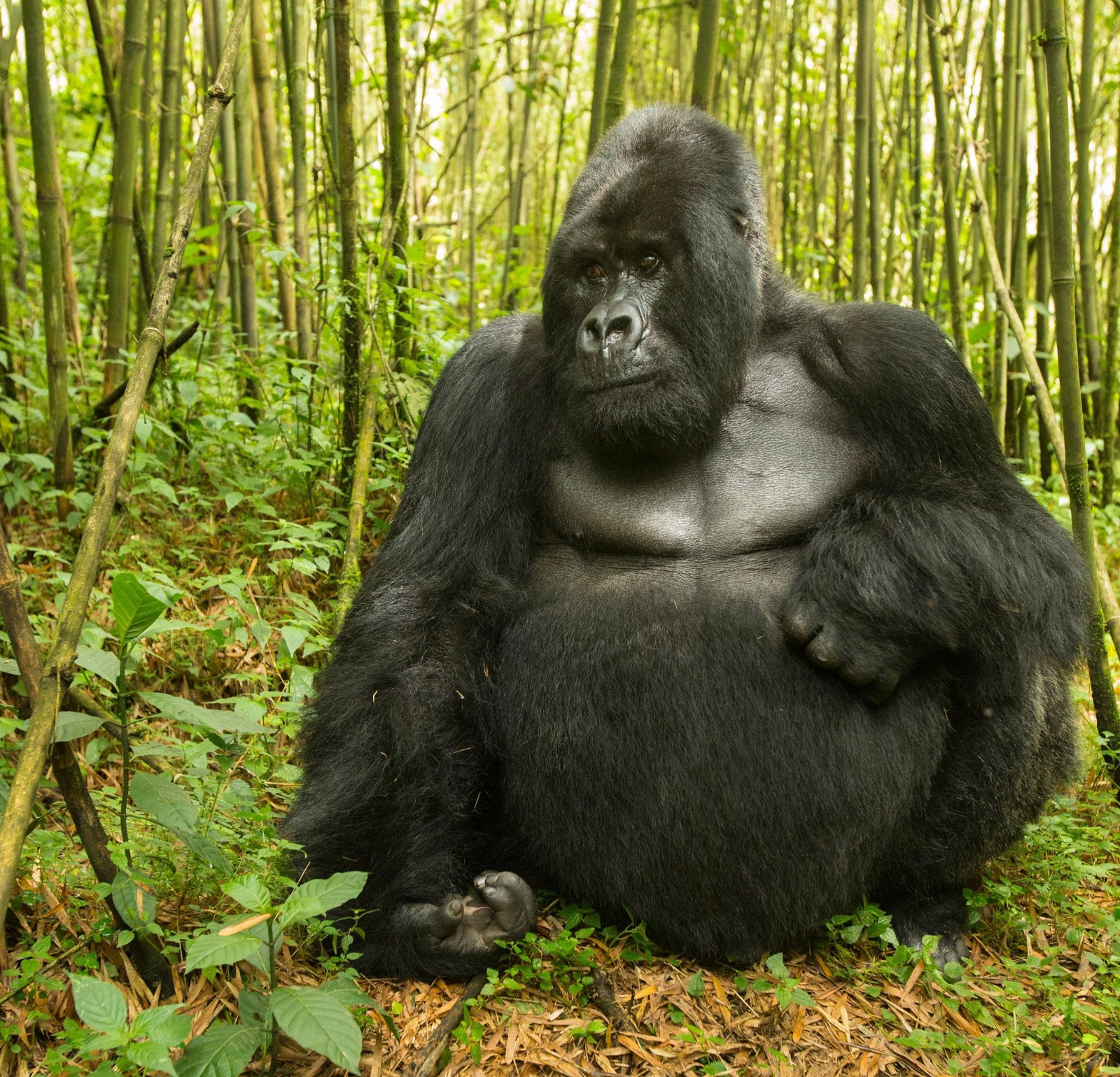
There are wildlife destinations where you go to watch animals. Then there are places where the journey becomes something much deeper—a meeting with nature, conservation history, extraordinary landscapes, and a species whose survival has become an international conservation story.
Gorilla trekking in Rwanda belongs to the second category.


High in the mist-covered Virunga Mountains of northwestern Rwanda, Volcanoes National Park protects one of Africa's most extraordinary mountain ecosystems and provides travellers with the rare opportunity to encounter endangered mountain gorillas in their natural habitat.
But what makes a Rwanda gorilla trekking safari so remarkable is not simply the gorillas.
It is the story behind them.
It is the history of a protected area established almost a century ago, the scientific legacy of Dian Fossey, decades of conservation work, the involvement of local communities, carefully managed wildlife tourism, the dramatic volcanic landscape, and Rwanda's continuing efforts to secure a larger and more resilient habitat for the gorillas.
For travellers planning an African safari in 2026–2027, Volcanoes National Park offers something that is difficult to reproduce elsewhere: the opportunity to walk through a high-altitude rainforest and eventually find yourself only a short distance from a wild gorilla family, watching mothers care for infants, juveniles play, and powerful silverbacks protect their groups.
This is not an ordinary safari.
It is a journey into one of Africa's most important conservation landscapes.
Volcanoes National Park: Why This Destination Is So Significant


Volcanoes National Park lies in northwestern Rwanda, within the Virunga mountain range. The landscape is dominated by five volcanoes on the Rwandan side of the massif:
- Mount Karisimbi
- Mount Bisoke
- Mount Muhabura
- Mount Gahinga
- Mount Sabyinyo
The mountains rise above forests of bamboo, montane vegetation, grassland, swamp and other high-altitude ecosystems.
The result is a landscape unlike the open savannahs normally associated with an African safari.
Instead of looking across endless plains searching for lions or elephants, visitors climb into a living mountain ecosystem where the forest itself becomes part of the adventure.
And somewhere within that forest are the mountain gorillas.
More Than a Gorilla Destination


The international reputation of Volcanoes National Park is closely associated with gorilla trekking, but the park is much more than one wildlife experience.
Travellers can combine gorilla trekking with:
- Golden monkey trekking
- Volcano hiking
- Mount Bisoke hiking
- Mount Muhabura hiking
- Mount Karisimbi expeditions
- Mount Sabyinyo hiking
- Dian Fossey-related experiences
- Birdwatching
- Nature walks
- Buhanga Eco-Park
- Musanze Cave experiences
- Community and cultural experiences
This diversity allows travellers to create a Rwanda safari around different interests rather than treating the destination as a single-activity park.
A Conservation History That Makes Volcanoes National Park Different
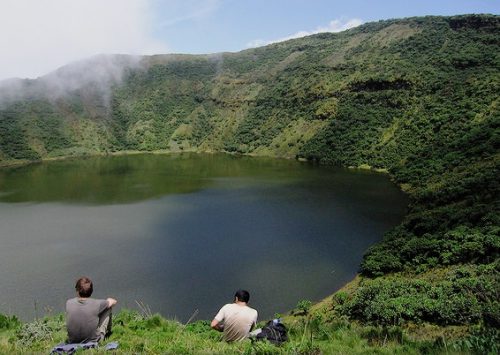
From 1925 to Today: Nearly a Century of Conservation
The story of Volcanoes National Park begins in 1925, when the protected area was established as part of what became the Albert National Park.
The original protected area was created partly to safeguard mountain gorillas from hunting and other pressures.
The protected landscape was later expanded, and the wider Albert National Park covered territories that are today divided between Rwanda and the Democratic Republic of Congo.
After political changes and independence, the Rwandan section became what is now known as Volcanoes National Park.
However, the history of the park has never been simple.
The protected area experienced habitat loss, pressure from surrounding communities, political instability, conflict and periods when tourism had to stop.
At one point, substantial portions of the forest were lost.
This history is important because the modern Volcanoes National Park should not be understood simply as a naturally perfect wilderness.
It is a conservation landscape that has had to recover.
Dian Fossey and the Beginning of a New Conservation Era
Few people are as closely connected with the history of mountain gorilla conservation as Dian Fossey.
In 1967, Fossey established the Karisoke Research Centre between Mount Karisimbi and Mount Bisoke.
Her long-term research transformed scientific understanding of mountain gorillas.
Instead of viewing gorillas simply as dangerous or mysterious wild animals, Fossey's work revealed complex social relationships, family structures, individual personalities and behaviours.
Her work also brought international attention to the threats facing gorillas, particularly poaching and habitat destruction.
The story later reached an enormous global audience through Gorillas in the Mist.
For visitors today, the Dian Fossey legacy adds an extraordinary historical dimension to gorilla trekking.
You are not simply visiting a beautiful forest.
You are entering a landscape that became one of the world's most important centres for mountain gorilla research and conservation.
From Crisis to Conservation Success
The Remarkable Recovery of the Mountain Gorillas


Perhaps the strongest reason Volcanoes National Park deserves international attention is the conservation story taking place within and around the Virunga ecosystem.
The mountain gorilla population has increased substantially from historical lows.
In 2010, the Virunga population was recorded at 480 individuals. Today, the wider mountain gorilla population across the Virunga Massif and Bwindi ecosystem is above 1,000, with Rwanda's Virunga population forming an important part of that recovery.
This achievement did not happen because of tourism alone.
It resulted from years of cooperation involving:
- Rangers
- Researchers
- Veterinarians
- Conservation organizations
- Government institutions
- Tourism operators
- Local communities
- International partners
The lesson is important:
Conservation Continues Into 2026

The conservation story is still developing.
Rwanda is pursuing an ambitious programme to expand the habitat around Volcanoes National Park by approximately 23%, adding about 37.4 square kilometres of protected habitat and creating buffer areas.
The programme is designed not only to benefit gorillas but also to address human-wildlife interactions and improve livelihoods around the park.
This is an important part of understanding the future of gorilla trekking in Rwanda 2026–2027.
The goal is not simply to bring more tourists.
The goal is to create a stronger ecological foundation for the wildlife that attracts those tourists.
How Rwanda Organizes Gorilla Trekking


One of the defining features of a Rwanda gorilla safari is the level of organization surrounding the experience.
Gorilla trekking is not an uncontrolled wildlife encounter.
Visitors receive a briefing before entering the forest, are accompanied by trained guides and trackers, and are assigned to gorilla groups according to the established trekking system.
The encounter itself is carefully managed to reduce disturbance to the gorillas.
This responsible approach is essential because gorillas are wild animals and their health and wellbeing must remain more important than photography or tourism.
The Experience Begins Before the Forest


A typical gorilla trekking morning begins early.
Travellers arrive at the park headquarters in Kinigi, where they receive instructions and meet guides and other members of the trekking team.
Porters are also available.
Hiring a porter is highly recommended, particularly because the terrain can be steep, muddy and demanding.
The porter does more than carry a backpack.
They can provide physical support on difficult sections of the trail and contribute directly to local livelihoods.
What Is It Really Like to Meet Mountain Gorillas?
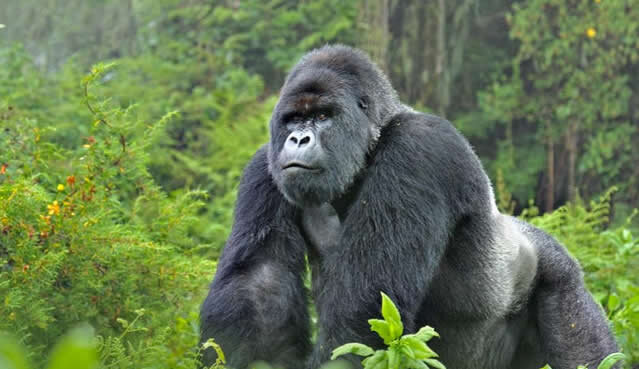


The experience begins with a hike.
You walk through bamboo and montane vegetation.
You listen to birds.
You watch the changing landscape.
You follow the signs left by gorillas and the information provided by trackers.
And then the atmosphere changes.
Your guide may suddenly ask everyone to stop.
The trackers have found the family.
You move carefully through the vegetation.
And then you see them.
A large silverback.
A mother with her infant.
Young gorillas climbing, playing or feeding.
A family resting quietly in the forest.
For many travellers, this is the moment when the physical effort of the trek suddenly makes sense.
The gorillas are not performing for visitors.
They are simply living.
That is what makes the encounter so powerful.
Gorilla Trekking Rwanda: Why It Is Different From an Ordinary Safari

A traditional African game drive normally involves travelling through a vehicle and searching for wildlife across a relatively large landscape.
Gorilla trekking is different.
You leave the vehicle behind.
You enter the forest.
You walk.
You follow trackers.
You climb through changing terrain.
You search for signs of wildlife.
And eventually, you encounter a gorilla family at close range.
This creates a completely different relationship between traveller and landscape.
You are not simply observing Africa from a safari vehicle.
You become physically part of the environment.
Volcanoes National Park Beyond Gorilla Trekking

Although gorilla trekking is the park's signature experience, travellers should not make the mistake of visiting Volcanoes National Park only for gorillas.
The volcanic landscape creates an entire adventure destination.
Golden Monkey Trekking


Golden monkey trekking provides one of the most exciting alternatives to gorilla trekking.
The golden monkey is a striking primate with bright golden-orange fur and is endemic to the Albertine Rift region.
Unlike gorillas, which often move more deliberately, golden monkeys are energetic and fast.
They jump.
They climb.
They move through bamboo.
They disappear and reappear.
Photographing them requires patience and quick reactions.
For travellers who want another primate experience after gorilla trekking, a golden monkey trekking tour in Rwanda is an excellent addition.
Hiking Mount Bisoke

Mount Bisoke provides another completely different way to experience the Virunga landscape.
The hike takes you through montane forest towards the famous crater lake at the summit.
The journey can take approximately six to seven hours for less experienced hikers, including descent.
The terrain can become muddy and slippery, particularly in wet conditions.
The reward is the dramatic high-altitude landscape and crater lake.
Hiking Mount Muhabura

Mount Muhabura offers a demanding mountain adventure with spectacular views across the Virunga landscape.
It is particularly suitable for travellers who want to combine wildlife with physical adventure.
From the higher slopes, the surrounding volcanic landscape becomes part of the experience itself.
Mount Karisimbi


At approximately 4,507 metres, Mount Karisimbi is the highest of Rwanda's Virunga volcanoes.
A Karisimbi expedition is significantly more demanding than a standard gorilla trek and is better suited to travellers with appropriate fitness and preparation.
For adventure travellers, however, it offers an opportunity to experience the Virunga Mountains beyond the famous gorilla trails.
Mount Gahinga and Mount Sabyinyo
Mount Gahinga and Mount Sabyinyo provide additional opportunities for travellers interested in hiking and exploring the volcanic environment.
Together, these mountains give the region its extraordinary character.
You do not simply visit Volcanoes National Park.
You experience an entire volcanic landscape.
Dian Fossey's Legacy: A Different Kind of Journey
Travellers interested in conservation history can also explore experiences connected with Dian Fossey.
Visiting the area associated with her research allows travellers to understand how scientific research, conservation and tourism became interconnected in the Virunga Mountains.
For someone interested in the history of gorilla conservation in Rwanda, this can transform a wildlife holiday into an educational journey.
Buhanga Eco-Park and Musanze Caves
Volcanoes National Park can also be combined with nearby attractions.
Buhanga Eco-Park


Buhanga is an ancient forest associated with Rwandan cultural traditions and folklore.
It offers a different perspective on the region, connecting nature with Rwandan heritage.
Musanze Caves
The Musanze Caves provide another geological experience connected with the volcanic history of the area.
The caves were formed by ancient volcanic activity and offer travellers another way to understand the geological forces that shaped northern Rwanda.
Volcanoes National Park vs Akagera National Park

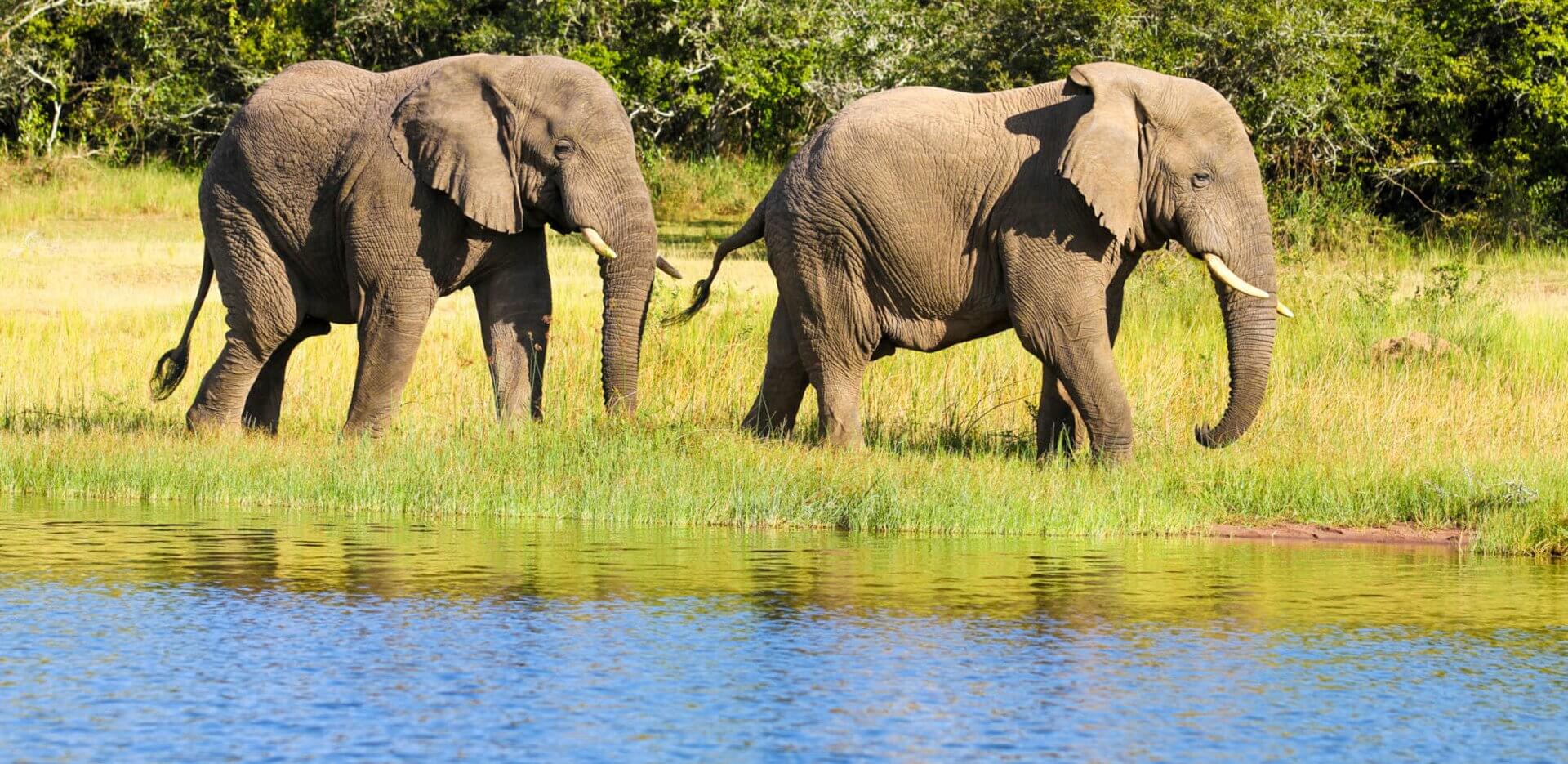
Rwanda is small enough that travellers can combine very different ecosystems within one safari.
Volcanoes National Park and Akagera National Park should not be viewed as competitors.
They provide different safari experiences.
Volcanoes National Park Akagera National Park
- Mountain gorillas Big Five wildlife
- Golden monkeys Lions
- Bamboo and montane forest Savannah
- Volcano hiking Game drives
- High-altitude landscapes Wetlands and plains
- Primate trekking Boat safari
- Gorilla conservation Large mammal conservation
This difference is one of Rwanda's greatest tourism advantages.
A traveller can see gorillas in the mountains and then travel east to experience a completely different African landscape at Akagera.
What Makes Akagera Different From the Serengeti and Masai Mara?

The Serengeti and Masai Mara are globally famous for the Great Migration, one of the world's most spectacular wildlife movements.
That distinction should be respected.
Akagera does not attempt to reproduce the Great Migration.
Instead, its strength lies in something different: a compact Rwandan safari landscape combining savannah, lakes, wetlands and woodland, where travellers can search for the Big Five and combine game drives with boat experiences.
Akagera's conservation story is also remarkable.
After severe historical wildlife losses, long-term conservation management helped restore species including lions, rhinos and other wildlife.
The reintroduction of rhinos and the restoration of large mammal populations demonstrate how conservation can rebuild a damaged ecosystem.
Therefore, when comparing Akagera vs Serengeti or Akagera vs Masai Mara, travellers should think about experience rather than simply asking which park is bigger or more famous.
The Serengeti and Masai Mara are renowned for vast savannahs and the Great Migration.
Akagera offers a more compact, varied and distinctly Rwandan experience.
Game Drive Strategy in Rwanda
A successful safari is not simply about driving around until an animal appears.
In Akagera, game-drive strategy matters.
Early Morning Game Drives
Start early when wildlife is active and temperatures are cooler.
This can increase opportunities to encounter predators and other animals before the heat of the day.
Understand the Habitat
Different animals prefer different environments.
Open plains, wetlands, lakeshores and woodland create different wildlife opportunities.
Use Experienced Guides
Guides understand animal behaviour, tracks, habitat and recent sightings.
This knowledge can make a major difference.
Combine Game Drives With a Boat Safari
A boat safari on Lake Ihema adds another dimension.
Rather than viewing wildlife from a vehicle, travellers can observe hippos, crocodiles, birds and other wetland species from the water.
This is one reason an Akagera safari in Rwanda can complement a Volcanoes gorilla trekking experience so effectively.
A One-Day Gorilla Trekking Tour From Kigali: Is It Possible?


Yes, a one-day gorilla trekking tour from Kigali can be logistically possible because Volcanoes National Park is accessible by road from Kigali.
However, it is important to understand what “one day” means.
It is an extremely early start and a long day.
Suggested One-Day Gorilla Trekking Itinerary
04:00–04:30 – Pick-up in Kigali
Seek Wild Africa collects you from your hotel or agreed location.
04:30–07:00 – Drive to Kinigi
Travel north through Rwanda's beautiful countryside towards Musanze and Volcanoes National Park.
07:00–08:00 – Park briefing
Meet the trekking team, receive instructions and prepare for the forest.
08:00 onwards – Gorilla trek
Enter the forest with your guides and trackers.
The duration depends on the location and movement of the assigned gorilla family.
Gorilla encounter – up to the permitted viewing period
Spend the designated time observing the gorilla family.
After trekking – Lunch
Enjoy lunch and rest after the trek.
Afternoon – Return to Kigali
Drive back to Kigali.
Evening – Arrival in Kigali
End the journey at your hotel or preferred drop-off point.
Who Should Choose This Option?
A one-day gorilla trek is suitable for travellers with very limited time.
However, travellers who can afford two or three days should consider staying around Volcanoes National Park.
Why?
Because the region has much more to offer than the gorilla trek itself.
The Ideal 3-Day Gorilla Trekking Tour From Kigali
For travellers who want to experience Volcanoes National Park properly, three days provides a much more relaxed structure.
Day 1: Kigali to Volcanoes National Park


Morning
Seek Wild Africa picks you up from Kigali.
Travel north towards Musanze.
The journey provides opportunities to see Rwanda's famous rolling hills, rural landscapes and changing scenery.
Afternoon
Arrive in the Volcanoes region.
Check into your lodge.
Enjoy lunch and settle into your accommodation.
Late Afternoon
Depending on arrival time and interests, enjoy a relaxed local or cultural experience.
Evening
Early dinner.
Prepare trekking clothes and equipment.
Rest for the following day's gorilla trek.
Overnight: Volcanoes National Park area
Day 2: Gorilla Trekking in Volcanoes National Park

Early Morning
Wake up early and have breakfast.
Transfer to the park headquarters in Kinigi.
Park Briefing
Receive instructions from the park team.
Meet your guides and trackers.
Porters can be hired if required.
Gorilla Trekking
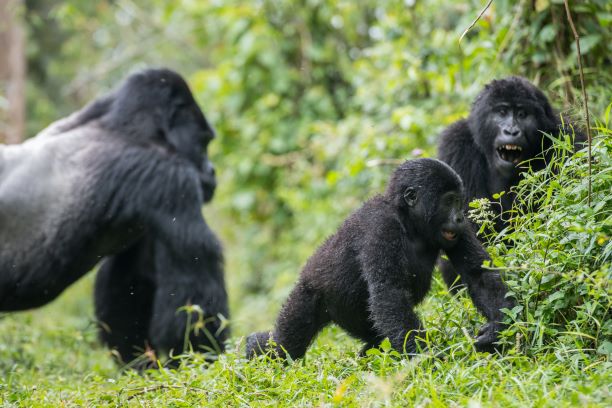
Enter the forest.
The trek may be relatively short or may require several hours depending on where the gorilla family is located and how far it has moved.
The journey itself is part of the adventure.
The Gorilla Encounter
Once the family is located, observe the gorillas according to park regulations.
Watch their natural behaviour.
Photograph responsibly.
Avoid sudden movements and loud noise.
Afternoon
Return from the forest.
Have lunch.
Rest at the lodge.
Evening
Enjoy the volcanic scenery and prepare for the following day.
Overnight: Volcanoes National Park area
Day 3: Golden Monkey Trekking and Return to Kigali

Early Morning
Breakfast at the lodge.
Transfer to the park headquarters.
Golden Monkey Trekking
Enter the forest searching for golden monkeys.
Watch as they move rapidly through bamboo and forest vegetation.
This provides a completely different primate experience from gorilla trekking.
Late Morning
Return from the trek.
Lunch and refreshment.
Afternoon
Depart Volcanoes National Park for Kigali.
Evening
Arrival in Kigali.
Your three-day Rwanda gorilla trekking and golden monkey safari ends.
This itinerary follows the general structure of Rwanda's own published three-day gorilla-and-golden-monkey itinerary, while allowing a tour operator to adapt the timing around the traveller's arrival, accommodation and trekking arrangements.
A One-Day Golden Monkey Trekking Tour From Kigali
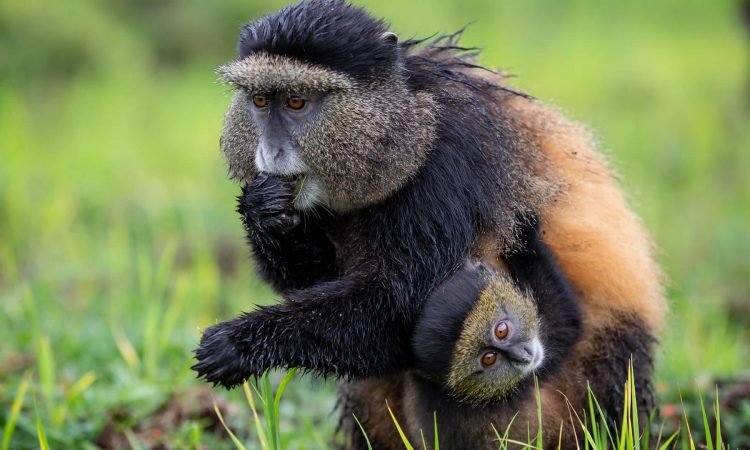
Golden monkey trekking can also be organized as a focused day experience.
Suggested Itinerary
05:00 – Pick-up in Kigali
Begin the journey north.
07:30–08:00 – Arrive around Kinigi
Prepare for the experience and complete park arrangements.
Morning – Golden Monkey Trekking
Enter the bamboo forest with guides and trackers.
Observe the golden monkeys in their natural environment.
Late Morning / Early Afternoon – Return
Finish the trek and enjoy lunch.
Afternoon – Drive back to Kigali
Travel through the Rwandan countryside.
Evening – Kigali
Drop-off at your hotel.
For travellers who have already completed gorilla trekking, golden monkey trekking is an excellent way to add another wildlife experience without extending the safari by several days.
Where to Stay Near Volcanoes National Park
Accommodation around Volcanoes National Park ranges from comfortable classic hotels and eco-lodges to internationally recognized luxury safari properties.
Luxury Lodges
Bisate Lodge


Bisate is an iconic luxury property surrounded by dramatic volcanic scenery and positioned close to Volcanoes National Park.
It is particularly attractive to travellers seeking an immersive conservation-focused luxury experience.
Singita Kwitonda Lodge


Singita Kwitonda offers high-end accommodation close to the park boundary, with sophisticated suites, private spaces and dramatic views.
Virunga Lodge

Virunga Lodge is known for its elevated position and panoramic views across the volcanoes and surrounding lakes.
Sabyinyo Silverback Lodge
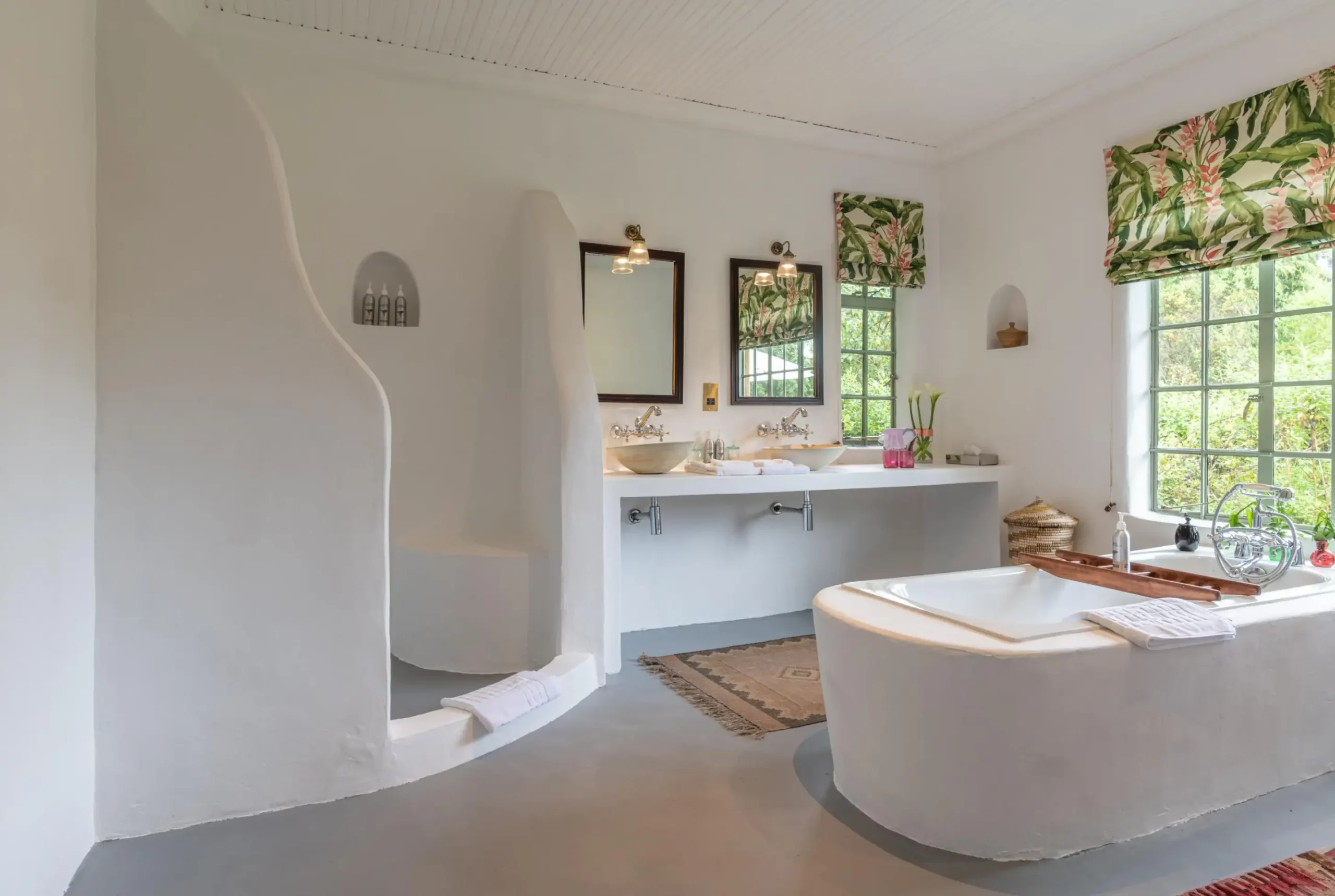
Located near the park headquarters, Sabyinyo provides private cottages, gardens and a classic luxury lodge atmosphere.
Comfortable Mid-Range and Classic Options
Travellers looking for a comfortable stay without choosing an ultra-luxury lodge can consider properties such as:
- Five Volcanoes Boutique Hotel
- Amakoro Songa Lodge
- Tiloreza Volcanoes Ecolodge
- Other locally operated hotels and lodges around Musanze and Kinigi
The best accommodation depends on budget, trekking date, preferred level of comfort and how close you want to stay to the park headquarters.
Why Stay Near the Park Instead of Returning to Kigali?
Staying around Volcanoes National Park has an important advantage.
It reduces pressure on the morning schedule.
Instead of waking extremely early in Kigali and driving several hours before trekking, you can wake near the park, have breakfast and reach the briefing point more comfortably.
It also gives you more time to enjoy Musanze and the surrounding volcanic landscape.
For travellers investing in a premium Rwanda gorilla trekking experience, staying near Volcanoes National Park is often the more immersive approach.
Why Volcanoes National Park Is One of Africa's Most Remarkable Wildlife Destinations
So, what makes Volcanoes National Park stand out?
Not one single factor.
It is the combination.
1. A Nearly Century-Long Conservation Story
The protected landscape dates back to 1925.
2. The Mountain Gorilla
The park protects one of the world's most extraordinary populations of mountain gorillas.
3. A Proven Conservation Recovery
Mountain gorilla numbers have increased dramatically from historical lows.
4. The Dian Fossey Legacy
The park is inseparable from one of the most important chapters in primate research.
5. Extraordinary Volcanic Landscapes
Five major volcanoes create a dramatic setting for wildlife and adventure.
6. Golden Monkeys
The park provides another rare primate experience beyond gorillas.
7. Adventure Beyond Wildlife
Travellers can hike volcanoes, explore caves, experience forests and discover local culture.
8. Responsible Tourism
Gorilla encounters are carefully managed, helping limit disturbance.
9. Community Conservation
Tourism revenue contributes to communities surrounding Rwanda's protected areas.
10. Accessibility From Kigali
Volcanoes National Park can be reached by road from Kigali, allowing travellers with limited time to include gorilla trekking in a Rwanda itinerary.
For these reasons, Volcanoes National Park has developed a reputation far beyond Rwanda's borders and can reasonably be described as one of Africa's most significant and distinctive wildlife destinations.
Responsible Gorilla Trekking: What Every Traveller Should Know
A great safari is not simply about what you take home in photographs.
It is also about how you leave the destination.
Respect the Gorillas
Never attempt to touch a gorilla.
Do not feed wildlife.
Do not make unnecessary noise.
Follow the instructions of your guide and trackers.
Keep Your Distance
The official guidelines governing gorilla encounters exist to protect both visitors and gorillas.
Do Not Trek When You Are Sick
Mountain gorillas are vulnerable to human respiratory illnesses.
If you are unwell, communicate with your tour operator and follow the applicable park guidance.
Support Local Communities
Hiring a porter is one practical way to contribute directly to people living around the destination.
Purchasing locally made products and choosing responsible tourism businesses can also help spread tourism benefits.
What to Pack for Gorilla Trekking in Rwanda
Volcanoes National Park is a mountain environment, so weather can change quickly.
Essential Clothing

Bring:
- Long trousers
- Long-sleeved shirts
- Waterproof jacket
- Warm fleece or sweater
- Comfortable hiking boots
- Gaiters
- Waterproof trousers if available
- Gloves
- Hat
- Extra socks
Trekking Equipment
Bring:
- Small waterproof daypack
- Walking poles if desired
- Binoculars
- Camera
- Extra batteries or power bank
- Sunscreen
- Insect repellent
- Personal medication
- Basic first-aid supplies
Bring a Reusable Water Bottle
Rwanda has strong environmental regulations restricting single-use plastic items.
Instead of packing disposable plastic water bottles, travellers should bring a reusable stainless-steel, aluminium or durable reusable water bottle.
A reusable hydration bottle or refillable insulated bottle is especially useful during long trekking days.
Avoid bringing unnecessary single-use plastic bags and disposable plastic packaging.
Responsible packing is not just about following rules.
It is about protecting the same ecosystem you travelled so far to experience.
How Seek Wild Africa Can Organize Your Rwanda Gorilla Safari
Planning a gorilla trekking safari involves more than purchasing a permit.

You need to coordinate:
- Gorilla trekking permits
- Airport transfers
- Kigali accommodation
- Transport to Volcanoes National Park
- Professional driver-guide services
- Lodge reservations
- Gorilla trekking arrangements
- Golden monkey trekking
- Volcano hiking
- Porter arrangements
- Meals
- Cultural experiences
- Additional Rwanda destinations
- Safari extensions
- Travel timing
- Return transfers
This is where Seek Wild Africa helps.
We prepare customized Rwanda safari experiences based on your available time, interests and budget.
Whether you have only one day available or want to spend several days exploring Rwanda, we can organize the journey as a complete experience rather than leaving you to coordinate each part separately.
From Gorilla Trekking to a Complete Rwanda Safari
Your Rwanda journey does not have to end in Volcanoes National Park.
Seek Wild Africa can combine your gorilla experience with other destinations.
Gorilla + Akagera
Experience mountain gorillas in Volcanoes National Park followed by Big Five wildlife and a boat safari in Akagera.
Gorilla + Nyungwe
Combine gorilla trekking with chimpanzee trekking, canopy experiences and rainforest adventures in Nyungwe.
Gorilla + Lake Kivu
After trekking, slow down beside one of Africa's Great Lakes.
Gorilla + Kigali
Add Kigali's cultural experiences and the Kigali Genocide Memorial to understand more about Rwanda's history and transformation.
Complete Rwanda Safari
For travellers with more time, combine:
Kigali → Akagera → Nyungwe → Lake Kivu → Volcanoes National Park
This creates a journey across Rwanda's major landscapes, wildlife ecosystems and cultural experiences.
Why Choose Seek Wild Africa?

At Seek Wild Africa, we understand that travellers do not simply want transportation from one attraction to another.
They want a well-organized experience.
We help travellers:
- Choose the right safari duration
- Organize gorilla permits
- Plan accommodation
- Arrange private transport
- Build realistic itineraries
- Combine Rwanda's national parks
- Add golden monkey trekking
- Arrange volcano hikes
- Organize airport transfers
- Provide professional driver-guides
- Adjust trips according to budget and interests
- Assist with practical safari preparation
Our goal is to make your Rwanda gorilla trekking safari smooth, meaningful and memorable from the moment you arrive in Kigali until the moment your journey ends.
Final Thoughts: Enter the Forest, Meet the Gorillas, Discover Rwanda
A visit to Volcanoes National Park is difficult to describe simply as a safari.
- It is a story of mountains.
- It is a story of wildlife.
- It is a story of science.
- It is a story of conservation.
- It is a story of resilience.
And, most importantly, it is a story that is still being written.
When you walk into the forest searching for mountain gorillas, you are entering a landscape shaped by almost a century of conservation history.
When you see a silverback sitting quietly among the vegetation, you are witnessing the living result of generations of protection.
When you watch a mother gorilla caring for her infant, you are reminded that conservation is ultimately about protecting life.
And when you leave the forest, you do not simply leave with photographs.
You leave with a deeper understanding of why this extraordinary ecosystem matters.
For 2026–2027, a Rwanda gorilla trekking safari in Volcanoes National Park offers an extraordinary opportunity to experience one of Africa's most distinctive wildlife destinations—where endangered mountain gorillas, golden monkeys, ancient forests and towering volcanoes come together in one unforgettable landscape.
Your adventure begins in Kigali. The forest is waiting.
Plan Your Rwanda Gorilla Trekking Adventure With Seek Wild Africa
Whether you want a 1-day gorilla trekking tour from Kigali, a 3-day Rwanda gorilla trekking safari, a golden monkey trekking experience, a Volcanoes National Park hiking adventure, or a complete Rwanda safari combining gorillas, Akagera, Nyungwe and Lake Kivu, Seek Wild Africa can help organize your journey.
Explore Rwanda with Seek Wild Africa.