Nyungwe National Park: Why Rwanda’s Ancient Rainforest Should Be on Your Safari List
September 22, 2026Clementine
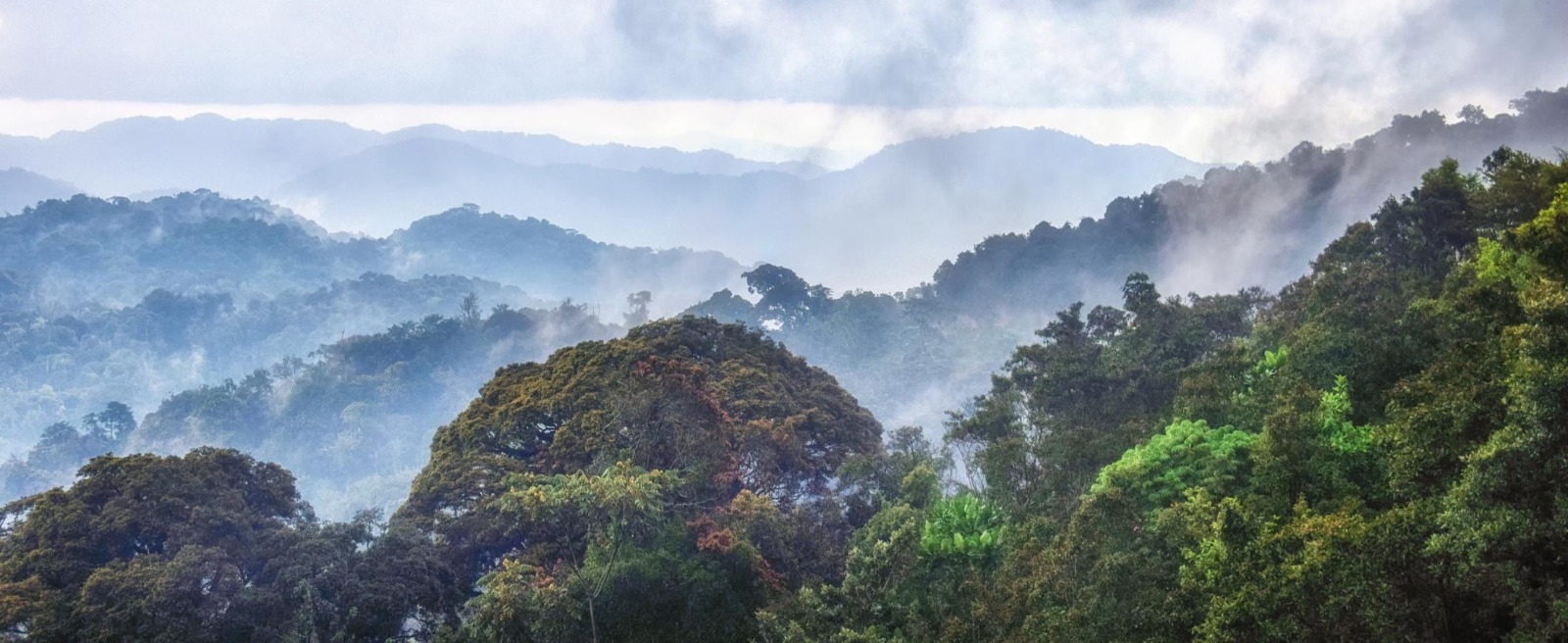
While many travellers associate an African safari with open savannahs, lions, elephants, buffalo and long game drives, Nyungwe National Park offers an entirely different interpretation of wildlife tourism. Here, the safari takes place beneath an ancient montane rainforest canopy, along misty mountain trails, beside waterfalls and high above the forest floor on a spectacular suspension walkway.


Nyungwe National Park is not a conventional African safari destination—and that is precisely what makes it so fascinating.
While many travellers associate an African safari with open savannahs, lions, elephants, buffalo and long game drives, Nyungwe National Park offers an entirely different interpretation of wildlife tourism. Here, the safari takes place beneath an ancient montane rainforest canopy, along misty mountain trails, beside waterfalls and high above the forest floor on a spectacular suspension walkway.
For travellers planning a Rwanda safari in 2026–2027, Nyungwe deserves serious consideration alongside Volcanoes National Park and Akagera National Park.
UNESCO inscribed Nyungwe National Park on the World Heritage List in 2023, recognising its exceptional biodiversity and importance to the conservation of species and habitats in the Albertine Rift. The protected area covers about 101,964 hectares and includes montane rainforest, wetlands, bamboo, grasslands and peatlands.
So, can Nyungwe reasonably be described as one of Africa's outstanding national parks?
Rather than relying on a simple label, its biodiversity, conservation history, World Heritage status, wildlife, landscapes and range of experiences provide the evidence for why it belongs on an African safari list.
Why Nyungwe National Park Stands Out in Africa


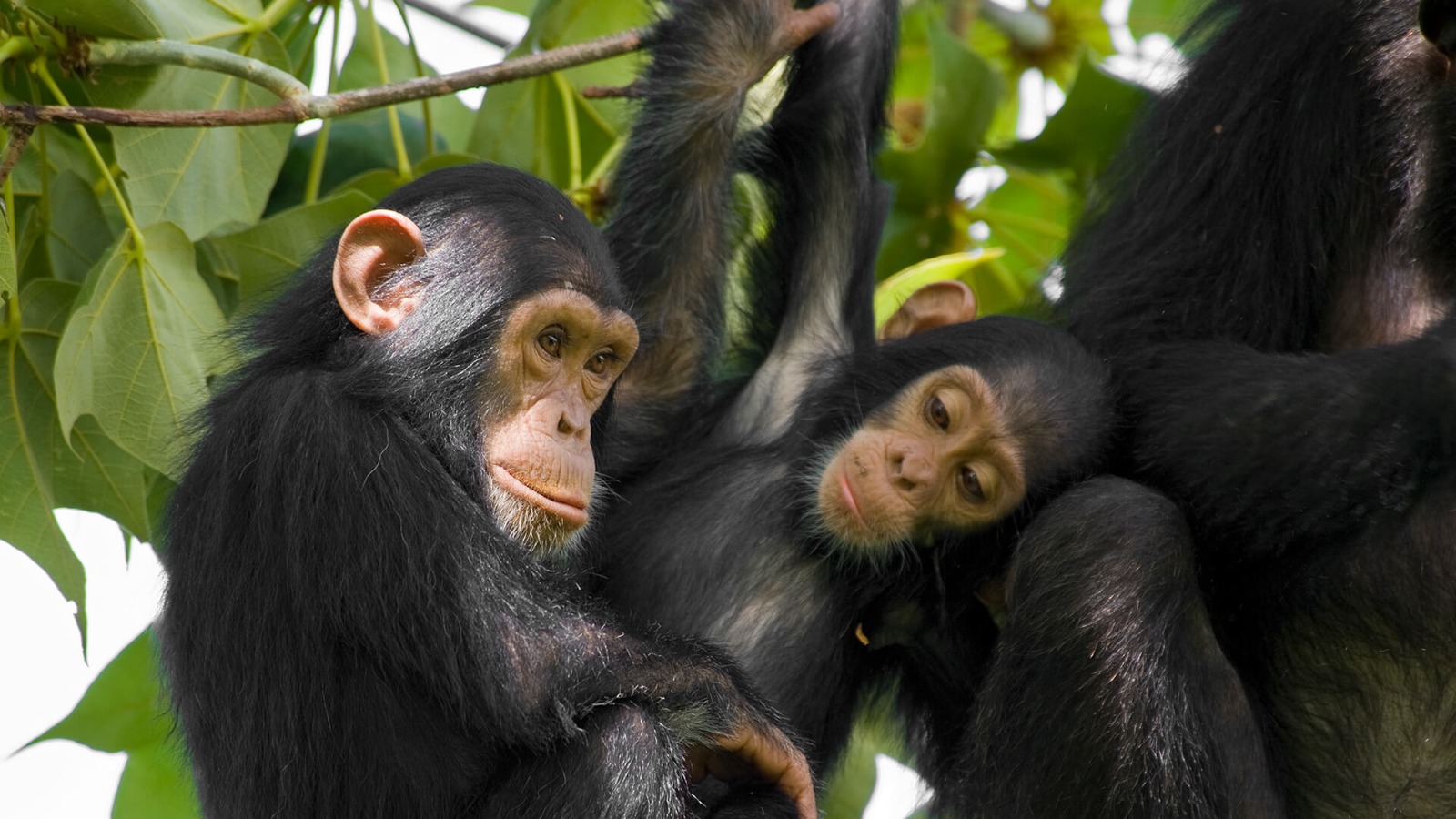
The park forms part of the Albertine Rift, one of Africa's major areas of biological diversity. UNESCO records 1,468 vascular plant species, 32 amphibian species, at least 290 butterfly species and 317 recorded bird species. The forest also supports an exceptionally rich primate community, including Eastern chimpanzees, golden monkeys, Angola colobus and L'Hoest's monkeys.
This means a visit to Nyungwe is not simply about finding one famous animal.
It is about entering an entire ecosystem.
You may begin your morning listening to chimpanzees calling through the forest, encounter monkeys moving through the canopy, hear unfamiliar bird calls, walk through giant trees and orchids, and finish the day looking down over a mist-covered valley.
That combination gives Nyungwe National Park safari experiences a character that is very different from open-plains wildlife destinations.
Nyungwe National Park History: From Forest Reserve to World Heritage Site
A Protected Forest with Decades of Conservation History
Nyungwe's formal protection dates back to 1933, when it was designated as a forest reserve. It later became Nyungwe National Park in 2005, strengthening its status as a protected natural area.
The journey has not been completely straightforward.
Like many African protected areas, Nyungwe has faced pressures including illegal resource extraction, poaching, forest fires, encroachment, infrastructure impacts and the challenge of balancing conservation with the needs of surrounding communities.
Its conservation story is therefore not simply about protecting a forest that has always remained untouched.
It is also a story of resilience, restoration and increasingly structured management.
From Conservation Challenges to Stronger Park Management
In 2020, the Government of Rwanda and African Parks entered into a 20-year management partnership for Nyungwe National Park. The partnership aims to strengthen biodiversity protection, tourism infrastructure, sustainable financing and community development.
Today, park management is guided by long-term planning, monitoring and conservation programmes. UNESCO reports that Nyungwe's management includes wildlife and vegetation monitoring, surveillance against threats such as poaching and illegal mining, community programmes and tourism planning.
The conservation model also involves surrounding communities.
Rwanda's tourism revenue-sharing system directs 10% of tourism revenue from national parks toward communities, supporting projects around protected areas.
African Parks reports that more than 1,600 local people are engaged in sustainable economic activities through community cooperatives, benefiting thousands of household members.
This is important because successful conservation is not only about protecting trees and animals. It also requires creating reasons for neighbouring communities to see the protected forest as an asset worth protecting.
Why UNESCO World Heritage Status Matters
UNESCO describes Nyungwe as one of the most biologically important and diverse Afromontane forests in Africa.
Its habitats extend from approximately 1,480 metres to 2,950 metres above sea level, creating different ecological environments within the same protected landscape.
The designation does not mean that every part of the park is completely free from conservation challenges. UNESCO continues to identify issues requiring ongoing management, including traffic through the park, buffer zones, encroachment and other pressures.
That continuing work is actually part of Nyungwe's conservation story: protection is an ongoing process, not a finished achievement.
Nyungwe vs Akagera, Serengeti and Masai Mara: Different Safari Experiences


It is important not to compare African parks as though they all offer the same product.
Serengeti and Masai Mara
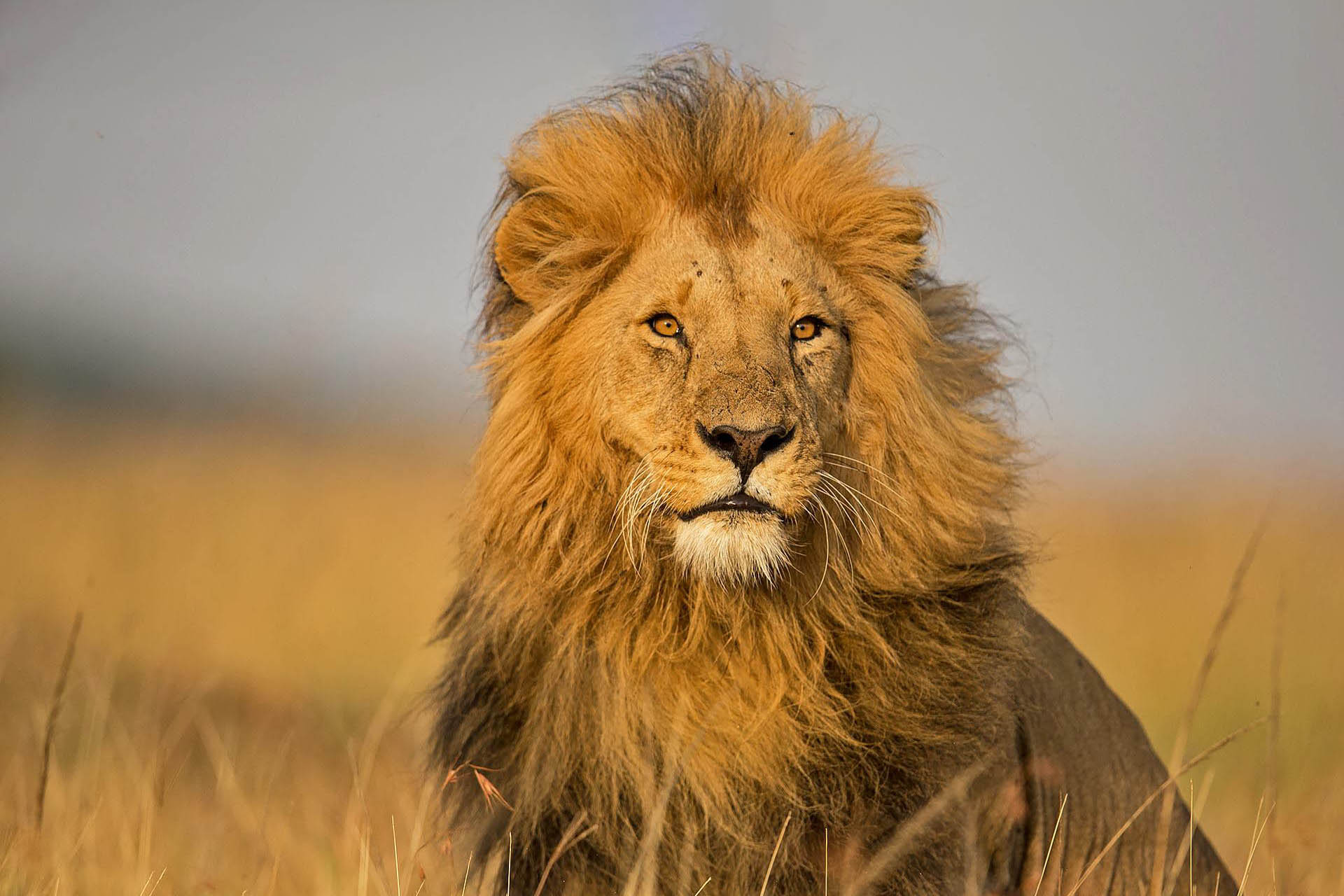
The Serengeti and Masai Mara are globally famous for vast savannah landscapes and the annual Great Migration, one of Africa's most spectacular wildlife events.
Akagera National Park
Nyungwe National Park

Nyungwe is different.
Its primary attraction is ancient montane rainforest biodiversity rather than large concentrations of savannah animals.
That means Nyungwe does not need to imitate the Serengeti or Masai Mara to be valuable.
Its strength is its identity:
- Ancient rainforest
- Chimpanzee trekking
- Multiple primate species
- Exceptional birding
- Canopy walking

- Forest hiking
- Waterfalls

- Mountain scenery
- Tea landscapes
- Ziplining

- Community-based conservation
- UNESCO World Heritage status
This makes a Rwanda safari itinerary combining Akagera, Nyungwe and Volcanoes National Park particularly diverse: savannah wildlife in Akagera, rainforest primates in Nyungwe, and mountain gorillas in Volcanoes.
Game Drive Strategy in Nyungwe: Think Beyond the Traditional Safari
Nyungwe is not primarily a game-drive destination.
This is one of the most important things travellers should understand before visiting.
In Akagera, a game drive may be planned around open habitats where guides search for elephants, buffalo, lions, giraffes, zebras and other savannah wildlife.
In Nyungwe, the forest is dense, mountainous and highly structured vertically.
The better strategy is therefore to combine:
- Chimpanzee trekking
- Primate tracking
- Canopy Walkway
- Forest hiking
- Birdwatching
- Waterfall hikes
- Zipline adventure
- Scenic drives through the forest
The park's road network can still provide opportunities for wildlife and landscape viewing, but travellers should not arrive expecting the same wildlife-viewing experience as the Serengeti.
Nyungwe is a walking safari, primate safari, rainforest safari and adventure destination all at once.
Things to Do in Nyungwe National Park Beyond Game Drives
1. Chimpanzee Trekking in Nyungwe


For many visitors, chimpanzee trekking in Nyungwe National Park is the defining experience.
Chimpanzees move through the forest searching for food, communicating with one another and building nests in trees for the night.
The experience starts early. Visit Rwanda states that tracking begins around 5:30 a.m. and may last from roughly an hour to several hours depending on where the chimpanzees are located. Once they are found, visitors are limited to a maximum of one hour with them.
There is no guarantee that chimpanzees will be found on every trek because they are wild animals that move naturally through the forest.
That uncertainty is part of what makes the experience genuine.
2. Nyungwe Canopy Walkway


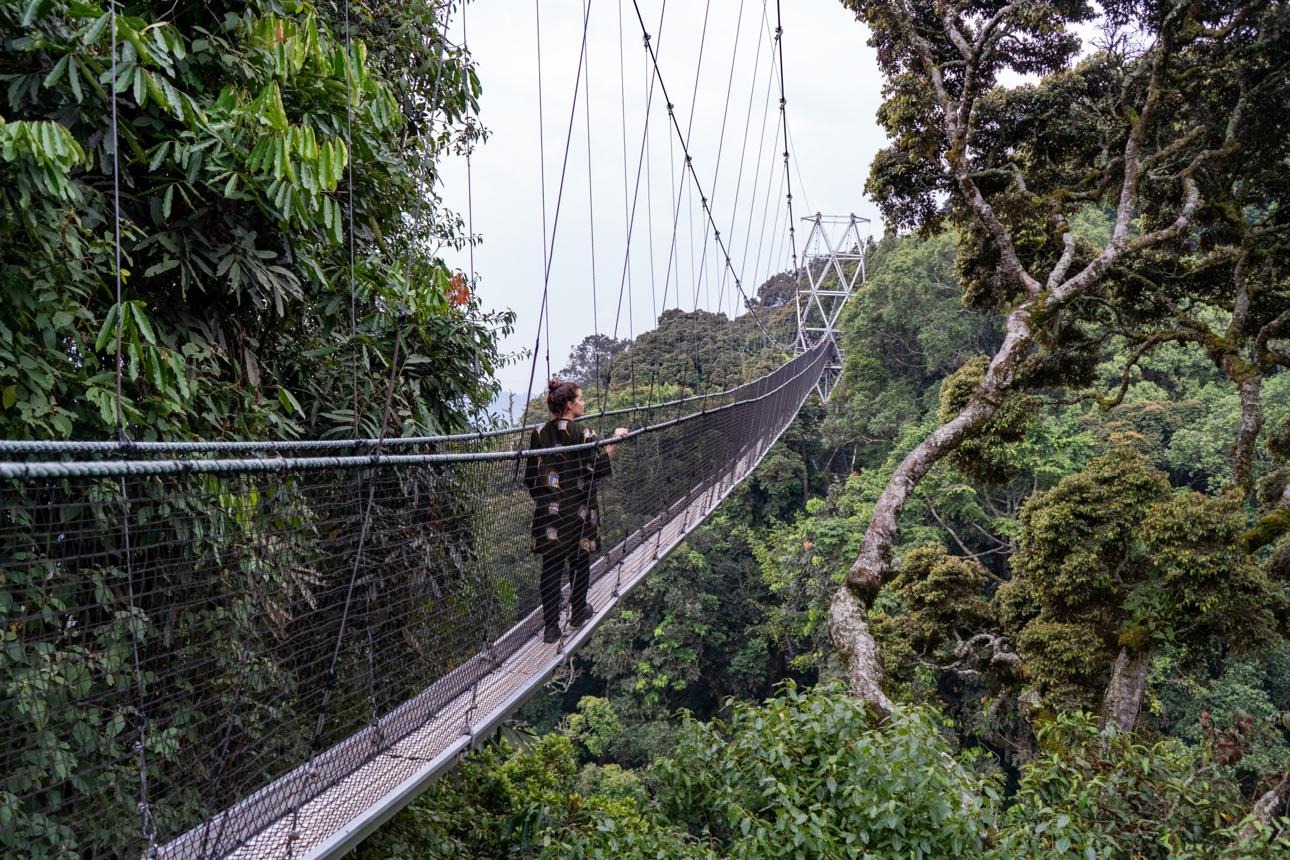
The Nyungwe Canopy Walkway changes the way you see the rainforest.
The suspension walkway is approximately 160 metres long and 70 metres above the forest floor, providing views across the canopy and surrounding mountainous landscape. It is accessed through a guided forest walk, including the Igishigishigi Trail.
Instead of looking up at the forest canopy, you are suddenly walking through its upper world.
Look carefully and you may see:
- Birds
- Butterflies
- Monkeys
- Orchids
- Giant trees
- Mist-covered mountain slopes
3. Waterfalls and Forest Hiking

Nyungwe has an extensive network of hiking trails.
The Umuyove Trail takes visitors beneath some of the forest's tallest trees and toward a waterfall, while the Imbaraga Trail offers several waterfalls along a more demanding route. The Kamiranzovu Trail explores the park's major wetland and waterfall environment.
For travellers who want a combination of forest scenery and water, waterfall hiking adds another dimension to the safari.
You are not simply watching nature.
You are moving through it.
4. Birdwatching in Nyungwe

Nyungwe is particularly important for bird enthusiasts.
UNESCO records 317 bird species, including globally threatened species and birds associated with the Albertine Rift.
Birdwatching can be combined with hiking, chimpanzee trekking and canopy experiences.
For serious birders, the forest can be an entire safari destination in itself.
5. Primate Tracking
Nyungwe supports one of Africa's richest montane rainforest primate communities.
Visitors may encounter species including:
- Ruwenzori black-and-white colobus
- L'Hoest's monkey
- Blue monkeys
- Golden monkeys
- Other forest primates
UNESCO identifies Nyungwe as a particularly important area for primate conservation.
6. Nyungwe Canopy Zipline

A newer adventure has added another reason to visit Nyungwe.
In 2025, the park introduced the Nyungwe Canopy Zipline, stretching approximately 1,935 metres, making it one of the longest in Africa according to African Parks. It begins at the Uwinka Visitor Centre and crosses the forest in three sections.
This experience is particularly attractive for travellers who want to combine:
wildlife + rainforest + hiking + adventure
in one Rwanda itinerary.
7. Gisakura Rope Course
Nyungwe's tourism offer has also expanded with the Gisakura Rope Course, a 280-metre aerial obstacle course containing 21 sections, including five ziplines.
It provides another option for visitors travelling with friends, families or groups.
8. Tea Plantation Experiences
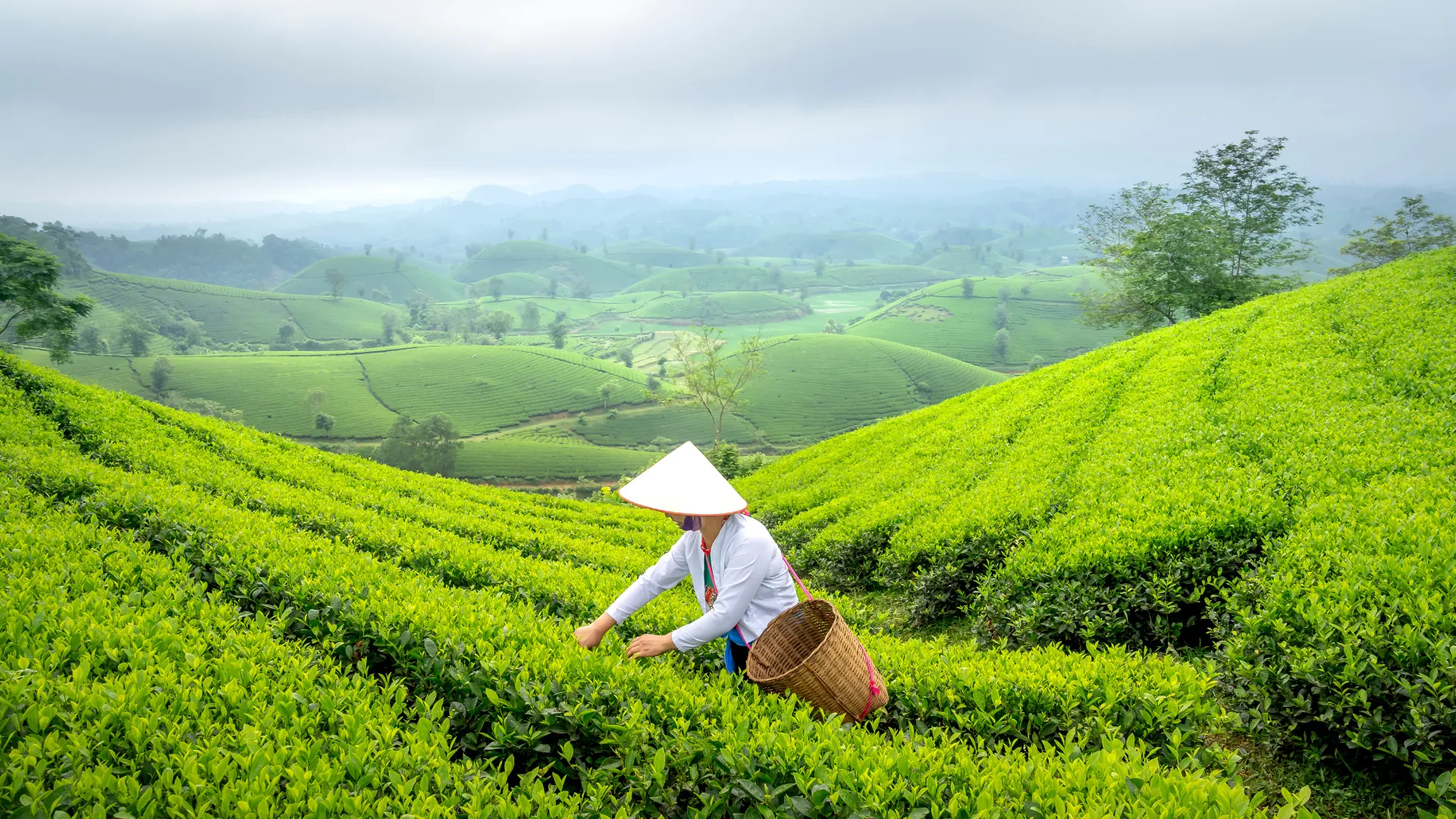
Gisakura Tea Estate sits along the western edge of Nyungwe, while Gisovu Tea Estate lies near the northern side of the forest. Tours can include tea plantations and tasting experiences.
This gives travellers an opportunity to experience not only the protected forest but also the agricultural landscapes that surround it.
Can You Visit Nyungwe in One Day From Kigali?

Yes—but understand what a one-day Nyungwe tour means
A one-day Nyungwe tour from Kigali is possible, but it is a demanding day.
Nyungwe is approximately 225 km from Kigali, and official park information estimates approximately 5–6 hours of driving between Kigali and Nyungwe.
For that reason, a one-day trip is best designed around one major experience, rather than trying to squeeze chimpanzee trekking, waterfalls, canopy walking and ziplining into the same day.
Suggested One-Day Nyungwe Canopy Walk Tour from Kigali
04:30–05:00 – Pick-up from Kigali
05:00–09:30 – Drive toward Nyungwe through Rwanda's southern highlands
09:30–10:00 – Arrival and registration/briefing
10:00–12:30 – Guided forest walk and Canopy Walkway experience
12:30–13:30 – Lunch/rest
13:30–14:00 – Coffee or short relaxation
14:00–18:30/19:00 – Drive back toward Kigali
Evening – Arrival in Kigali
This itinerary is suitable for travellers who want to experience the rainforest without staying overnight.
For chimpanzee trekking, however, an overnight stay is much more practical because chimpanzee tracking begins very early.
Two-Day Chimpanzee Trekking Tour in Nyungwe From Kigali

Day 1: Kigali → Nyungwe National Park → Canopy Walk

05:30 – Pick-up from your Kigali hotel.
05:30–11:30 – Scenic drive from Kigali toward Nyungwe.
Depending on the route and traveller interests, the journey can include stops around Huye or other southern Rwanda attractions.
11:30–12:30 – Arrival, check-in and lunch.
13:00–15:30 – Guided forest experience and Nyungwe Canopy Walkway.
Walk through the forest, cross the suspension bridge and enjoy views across the rainforest canopy and misty mountains.
16:00–17:30 – Optional tea experience or relaxed lodge time.
18:30 – Dinner.
Overnight: Nyungwe-area lodge or eco-lodge.
Day 2: Chimpanzee Trekking → Kigali

04:30–05:00 – Wake up and prepare for chimpanzee trekking.
05:00–05:30 – Transfer to the relevant briefing point.
05:30 – Chimpanzee trekking begins.
The trek may last several hours depending on chimpanzee movements. Visit Rwanda notes that visitors may spend up to one hour with the chimpanzees once they are located.
During the trek, watch for:
- Chimpanzees
- Colobus monkeys
- Blue monkeys
- Forest birds
- Butterflies
- Orchids
- Other rainforest wildlife
11:00–12:00 – Return and refresh.
12:00–13:00 – Lunch.
13:00–18:30/19:00 – Drive back to Kigali.
Evening – Arrival in Kigali.
Why this two-day format works
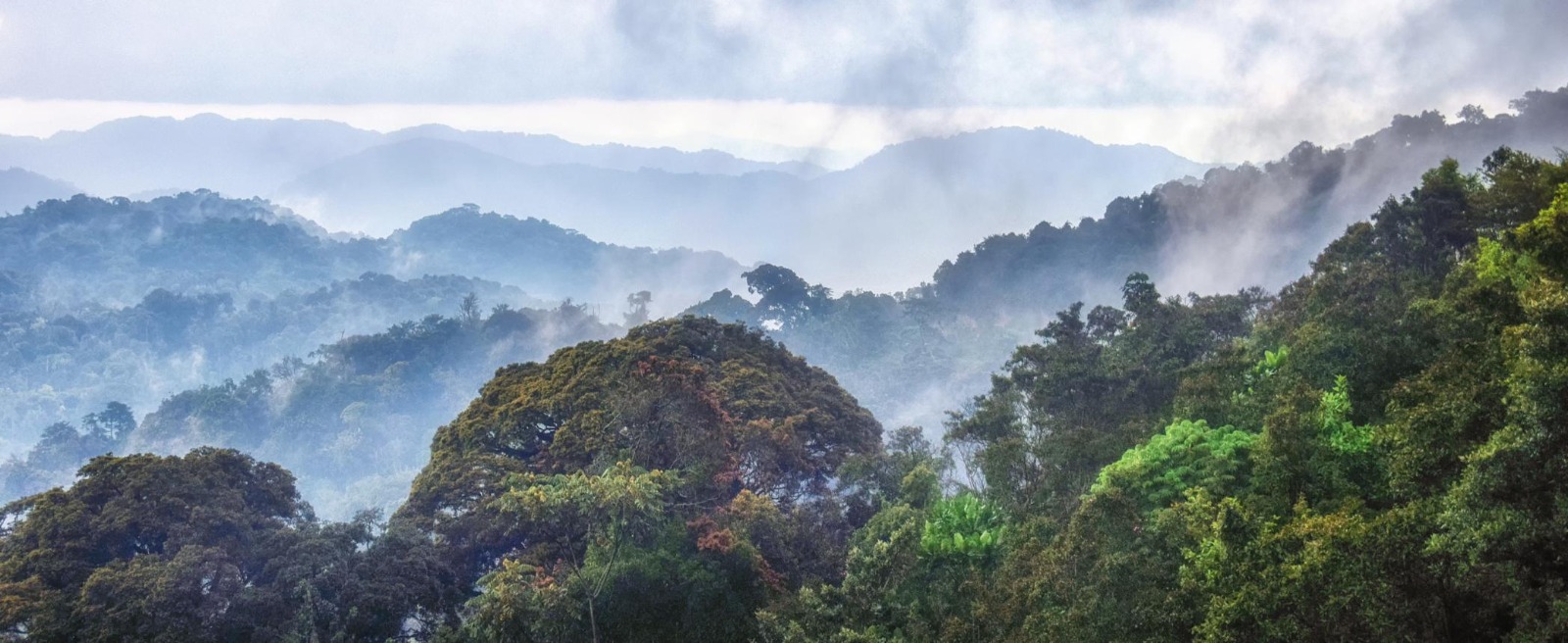
Instead of spending most of the trip travelling, travellers get enough time to experience the forest properly.
It combines two of Nyungwe's signature experiences:
Chimpanzee trekking + Canopy Walkway
while keeping the journey realistic from Kigali.
One-Day Nyungwe Zipline and Canopy Walk Itinerary

For adventure travellers with limited time, Seek Wild Africa can also structure a day around the newer aerial experiences.
Suggested itinerary
05:00 – Depart Kigali.
09:30–10:00 – Arrive in the Nyungwe area.
10:00–11:00 – Briefing and preparation.
11:00–13:00 – Nyungwe Canopy Zipline experience.
The 1,935-metre zipline crosses the rainforest from the Uwinka area.
13:00–14:00 – Lunch.
14:00–15:00 – Short rest and preparation.
15:00–17:00 – Guided forest walk and Canopy Walkway.
17:00 onward – Begin return journey to Kigali.
Because activities and operating schedules can change, Seek Wild Africa confirms the availability and timing with park management before finalising the programme.
Where to Stay in and Around Nyungwe National Park


Accommodation around Nyungwe ranges from comfortable classic hotels to eco-focused and higher-end properties.
Munazi Eco Lodge

Opened as part of Nyungwe's expanding tourism infrastructure, Munazi Eco Lodge provides an eco-conscious accommodation option near the park. African Parks describes it as a 20-bed lodge with nine A-frame cottages, including an executive A-frame.
Its design and location make it particularly appropriate for travellers interested in combining comfort with a stronger connection to the forest.
Nyungwe Top View Hill Hotel

This is a more straightforward accommodation option near the park headquarters, with cottages overlooking surrounding tea plantations. Visit Rwanda lists it as a classic accommodation option for Nyungwe visitors.
Nyungwe House
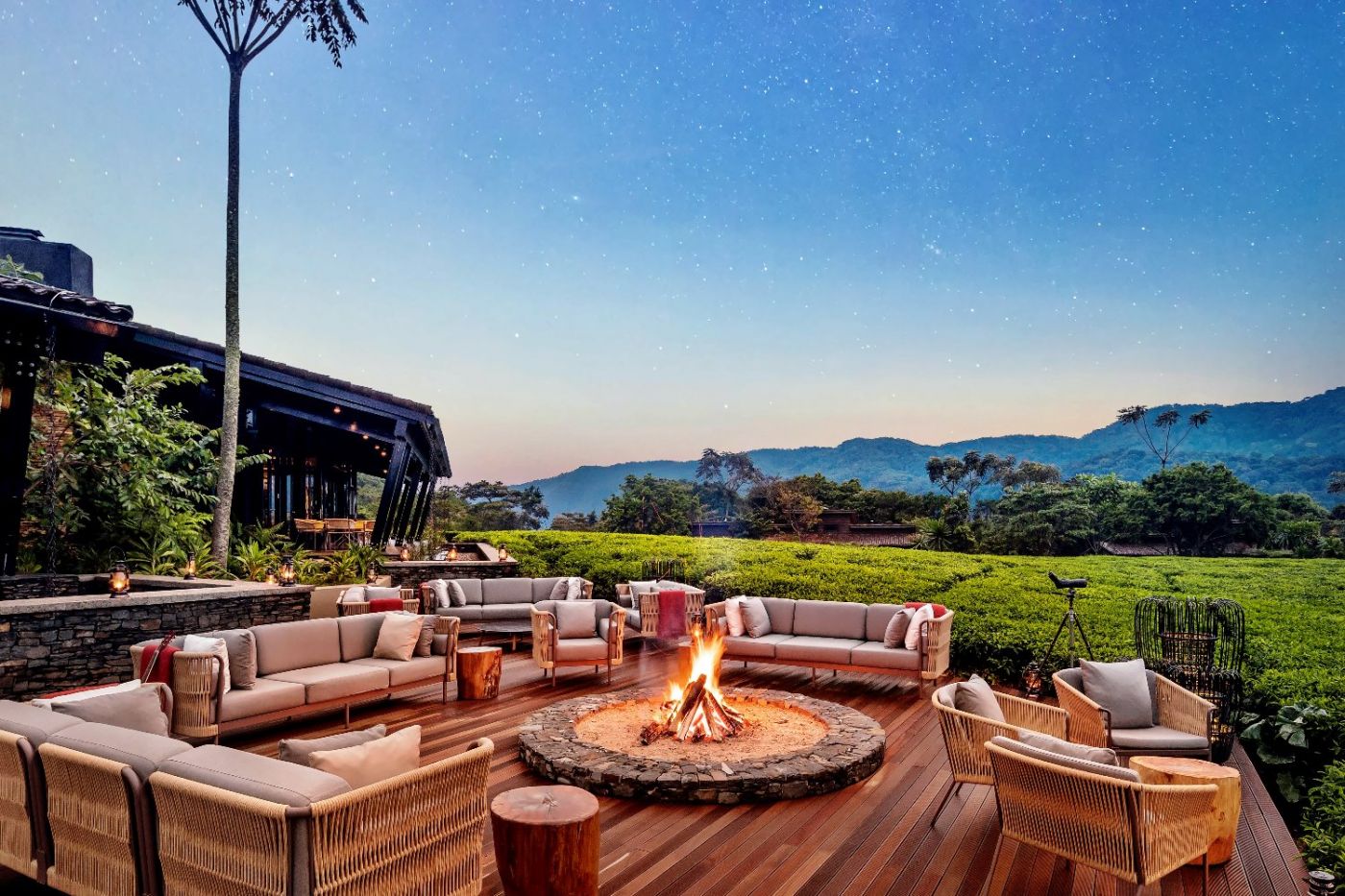
Nyungwe House is positioned on a tea plantation beside the forest and has historically provided a high-end luxury option for visitors combining chimpanzee trekking, canopy experiences and forest excursions.
Accommodation Outside the Park
Rusizi is the closest major town to Nyungwe and offers additional accommodation possibilities, particularly for self-drive or longer western Rwanda itineraries.
When Is the Best Time to Visit Nyungwe National Park?
Nyungwe is a rainforest, so rainfall is naturally part of the environment.
The advantage is that the forest remains green and atmospheric throughout much of the year.
For hiking and canopy experiences, travellers should be prepared for:
- Rain
- Muddy trails
- Cool temperatures
- Mist
- Changing mountain whttps://visitrwanda.com/destinations/nyungwe-national-park-2/eather
Visit Rwanda specifically recommends suitable footwear and a lightweight raincoat for the Canopy Walkway.
For chimpanzee trekking, the most important practical consideration is to start early.
What Makes a Nyungwe Safari Different?

A traditional safari often asks:
“What animals can we find?”
Nyungwe encourages a different question:
“How much of this rainforest can we discover?”
- You can spend the morning following chimpanzees.
- You can walk through giant trees in the afternoon.
- You can cross a suspension bridge above the forest.
- You can watch birds and butterflies.
- You can hike toward a waterfall.
- You can fly above the canopy on a zipline.
- You can finish the day surrounded by misty mountains and tea plantations.
That variety is the real strength of a Nyungwe National Park safari.
Conservation Is Part of the Nyungwe Experience

Nyungwe is not simply a tourism destination.
It is a living ecosystem whose conservation has implications far beyond tourism.
The forest contains important habitats, biodiversity and water catchment systems. African Parks describes Nyungwe as feeding the Congo and Nile river systems, while Rwanda's conservation programmes increasingly connect tourism, ecosystem protection and community development.
African Parks has also reported restoration initiatives, community cooperatives, ranger and eco-guard programmes and new tourism infrastructure designed to generate sustainable revenue.
For travellers, this means that responsible tourism is not an optional extra.
It is part of the experience.
What to Bring for a Nyungwe National Park Safari

Before travelling, pack carefully.
Essential items include:
- Comfortable hiking shoes or waterproof hiking boots
- Lightweight waterproof jacket/raincoat
- Long trousers
- Long-sleeved shirts
- Warm layer for cool mornings
- Hat
- Sunglasses
- Sunscreen
- Insect repellent
- Binoculars
- Camera
- Extra batteries/power bank
- Small backpack
- Personal medication
- Reusable water bottle
- Snacks where appropriate
Important: Avoid Plastic Bags
Rwanda has a strong environmental policy against plastic bags. Plastic bags have been banned by law since 2008, and visitors are asked not to bring them into the country.
Instead of disposable plastic bottles, travellers should carry a reusable, refillable water bottle, preferably a durable stainless-steel or hard reusable bottle.
A reusable bottle is particularly appropriate for a conservation-focused destination such as Nyungwe.
Always follow the latest instructions from park management regarding permitted containers, waste and other conservation rules.
How Seek Wild Africa Helps You Explore Nyungwe
Planning Nyungwe independently can become complicated because the experience is different from a normal game-drive safari.
At Seek Wild Africa, we help travellers turn the destination into a practical itinerary.
We can help organise:
Transport

Comfortable private transport from Kigali to Nyungwe and onward to other Rwanda destinations.
Professional Driver-Guide
A knowledgeable guide who helps manage the long journey, timing and activities.
Chimpanzee Trekking

We help arrange the appropriate park experience and build the itinerary around the early chimpanzee tracking start.
Canopy Walkway

We organise the experience as part of a one-day, two-day or longer Rwanda safari.
Zipline & Adventure Activities

We can incorporate the Nyungwe Canopy Zipline and other available activities into an adventure itinerary.
Accommodation
We help travellers select accommodation according to budget, comfort level, location and itinerary.
Multi-Park Rwanda Safaris
Nyungwe can be combined with:
Akagera National Park + Nyungwe National Park + Volcanoes National Park + Kigali + Lake Kivu
This allows travellers to experience several sides of Rwanda within one journey.
Short Rwanda Trips
Even travellers with limited time can have a carefully structured itinerary, including a one-day Nyungwe experience where practical or a two-day chimpanzee and canopy itinerary.
Why Put Nyungwe on Your 2026–2027 Rwanda Safari List?
Nyungwe does not need the Great Migration to justify a place on an African safari itinerary.
It offers something different.
It offers a rare combination of ancient rainforest, chimpanzees, primates, endemic birds, waterfalls, mountains, canopy experiences, adventure activities and conservation within one protected landscape.
Its history demonstrates decades of protection and evolving conservation management.
Its biodiversity has earned international recognition.
Its 2023 UNESCO World Heritage inscription confirms its global conservation importance.
And its newer tourism infrastructure is making it possible for travellers to experience the forest in increasingly varied ways.
For a traveller planning Rwanda in 2026 or 2027, Nyungwe can therefore be more than a stop between Kigali and Lake Kivu.
It can be one of the central experiences of the journey.
Explore Nyungwe National Park with Seek Wild Africa
Whether you want chimpanzee trekking, the Canopy Walkway, waterfalls, forest hiking, birdwatching, the Nyungwe Zipline, tea experiences or a complete Rwanda safari, Seek Wild Africa can help design and organise your trip around your time, interests and travel style.
Your Rwanda adventure can begin in Kigali—but it can take you deep into one of Africa's most remarkable mountain rainforests.
Explore Rwanda with Seek Wild Africa.